This Hollywood Hills residence is a 1960 home by architect Whitney R. Smith that was renovated by Ome Dezin with a focus on preserving its original modernist character. Located in The Colony, the house features sawtooth ceilings, angular rooflines and a strong structural rhythm that guided the redesign.
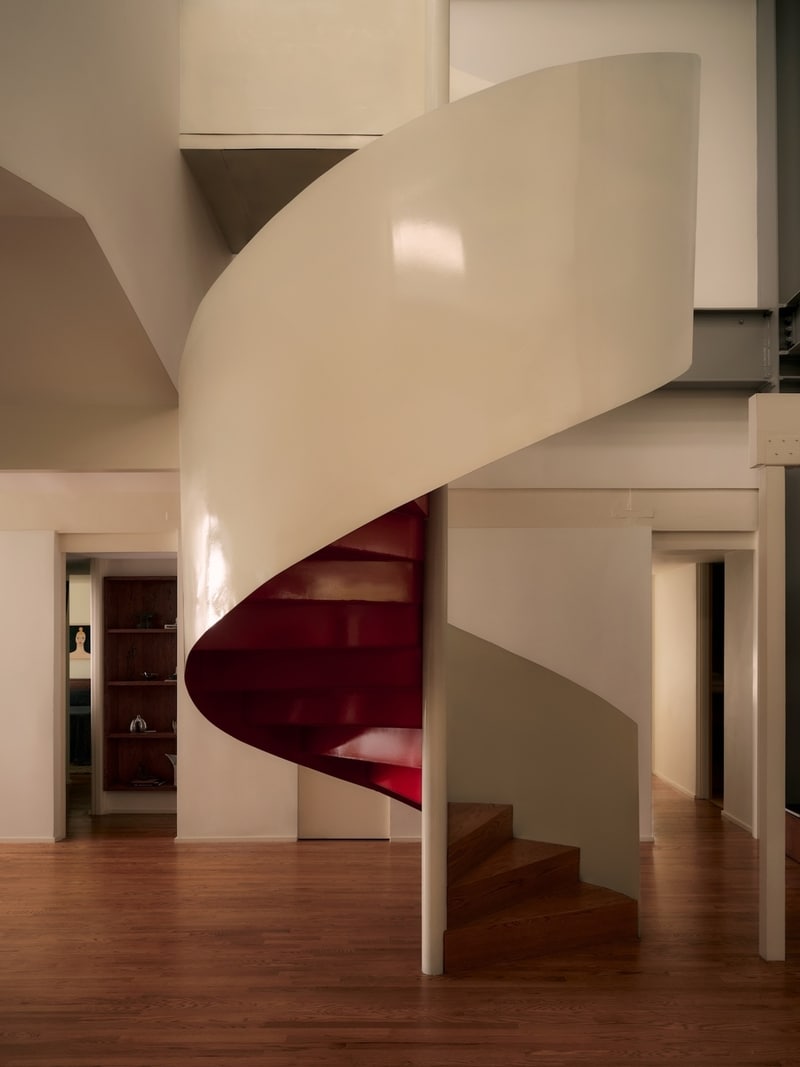
Earlier renovations had altered parts of the home's original layout, leading the studio to prioritize restoration over reinvention. Existing architectural elements, including the custom spiral staircase, ceiling heights and circulation patterns, were retained. A palette of wood, plaster and stone was introduced throughout the interiors, balancing the geometric forms and generous natural light.
The redesign references Italian modernism, particularly Villa Necchi Campiglio, through controlled material choices and carefully selected furnishings. A double-height foyer is anchored by an oversized pivot door and illuminated by daylight entering through the sawtooth roof profile. The spiral staircase features a red underside that contrasts with the otherwise restrained interior palette. Additional spaces include a yellow-toned shared bathroom with copper accents and glass brick details, a minimalist primary suite and a kitchen defined by wood cabinetry and a large stone island.
Image Credit: Ome Dezin
What's Driving This Trend
- Modernist Heritage Renovation
- Preservation-led redesign is creating demand for premium residential upgrades that retain architectural authenticity while integrating contemporary materials, lighting and spatial performance.
- Material-driven Interiors
- Wood, plaster, stone, copper and glass brick palettes signal an opportunity for suppliers and designers to differentiate homes through tactile finishes that balance warmth with geometric restraint.
- Statement Structural Details
- Distinctive elements such as spiral staircases, sawtooth ceilings and oversized pivot doors are becoming high-value focal points for renovations that turn existing architecture into experiential assets.
Who This Affects Most
- Residential Architecture
- Architectural firms can benefit from renewed interest in restoring mid-century homes where original circulation, rooflines and structural rhythms define the design value.
- Interior Design
- Curated references to Italian modernism and restrained furnishing choices highlight a growing market for interiors that merge historical influence with minimal contemporary living.
- Luxury Real Estate
- Homes with preserved modernist provenance and highly specific design features offer differentiation in premium property markets where authenticity and architectural storytelling influence buyer appeal.