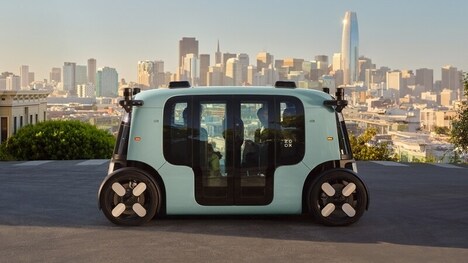

The Waymo Ojai is the autonomous driving technology company's first purpose-built robotaxi, built by Chinese manufacturer Zeekr, and outfitted with Waymo's autonomous driving hardware at the company's factory in Arizona. These vehicles are the first to use Waymo's 6th-gen Driver software, which introduces several improvements, including enhanced sensors and AI to handle challenging weather conditions like heavy rain and snow, which have kept Waymo operating in warm-weather locations.
For a limited time, passengers in San Francisco, Los Angeles and Phoenix can take free, fully autonomous trips in the Ojai. Within the expansive cabin, riders will see three large screens for customizing their "oasis on wheels" experience with everything from the music to the temperature of their choosing. What's more, all passengers can appreciate thoughtful details like a seat-integrated handle, embedded braille and screen-reader compatibility.
What Makes This Trend Stand Out
- All-weather Autonomous Navigation
- Improved sensor suites and AI models that maintain safe autonomy in rain and snow enable deployment of driverless fleets in previously excluded climates.
- Passenger-centric Cabin Personalization
- Cabin interfaces with large screens and customizable environments transform shared rides into individualized experiences tailored to comfort and entertainment preferences.
- Inclusive Accessibility in Robotaxis
- Integrated tactile handles, braille labeling and screen-reader compatibility set a new standard for universal design in autonomous vehicles.
Sectors Adopting This
- Urban Mobility and Public Transit
- High-reliability robotaxis operating across varied weather conditions have the potential to reshape first-mile/last-mile services and reduce dependence on private car ownership.
- Automotive Manufacturing and Supply Chains
- Purpose-built autonomous platforms assembled with specialized sensor arrays create demand for new partnerships and vertically integrated production models.
- Sensory AI and Perception Systems
- Advanced multimodal sensor fusion and robust perception algorithms open opportunities for new hardware-software ecosystems focused on adverse-weather resilience.