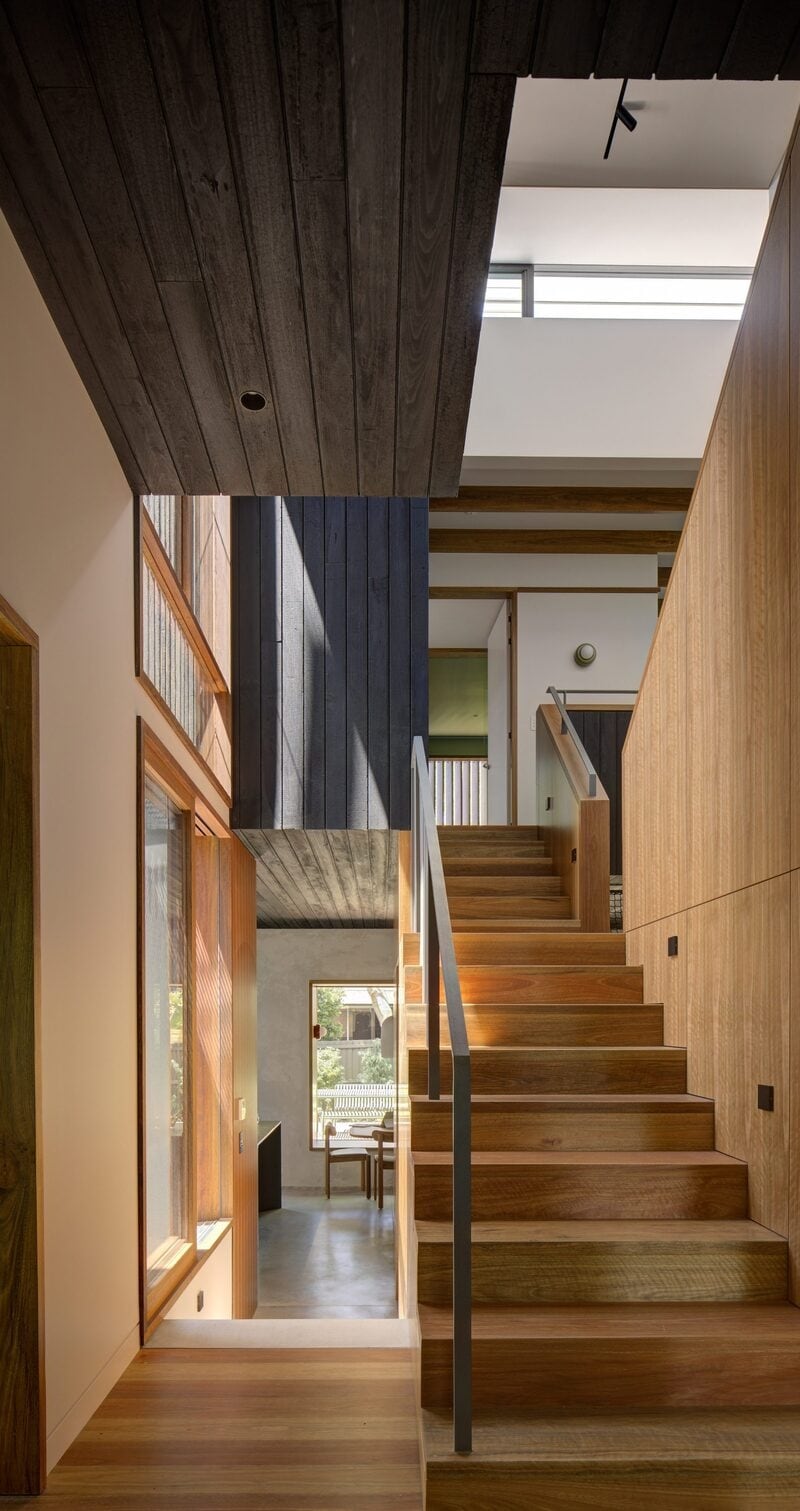
Waverley House reimagines a 1950s bungalow into a light-filled, nature-connected home by embedding living spaces within lush backyard greenery and redesigning internal levels. The architects lowered the ground floor to meet the garden level, introduced a central spotted-gum staircase, and carved out a lightwell to draw daylight deep into the footprint. These changes create a fluid spatial flow and a layered living experience where interior and exterior merge around a quiet, verdant core.
The renovation wraps family living in crafted materiality and landscape-driven layout. Charred timber cladding, white interior finishes, and carefully detailed glazing connect each room to surrounding Moreton Bay figs and leafy courtyards. The design balances open communal zones with softer private volumes and frames every view on greenery. Waverley House demonstrates how thoughtful renovation can transform modest heritage housing into a home rooted in light, timber warmth and deep connection to place.
Image Credit: Brett Boardman
What's Driving This Trend
- Nature-integrated Design
- Modern architecture increasingly blends indoor and outdoor spaces, offering homeowners a seamless connection with nature through strategic garden-edge and lightwell designs.
- Material-centric Renovations
- The innovative use of materials like charred timber and detailed glazing in renovations enhances aesthetic appeal while fostering a deeper connection with the surrounding environment.
- Heritage Home Transformations
- Reimagining heritage homes with contemporary design elements allows for preserving architectural history while providing modern comforts and sustainable living solutions.
Who This Affects Most
- Architectural Design
- The field of architecture benefits from integrating traditional structures with modern, sustainable practices that prioritize environmental ethos and aesthetic continuity.
- Home Renovation
- The renovation sector sees a shift towards projects that emphasize fluid spatial transitions and outdoor connectivity, driven by consumer demand for holistic living environments.
- Sustainable Construction
- Sustainable construction gains momentum as it focuses on using eco-friendly materials and designs that harmonize with natural landscapes and reduce environmental impact.