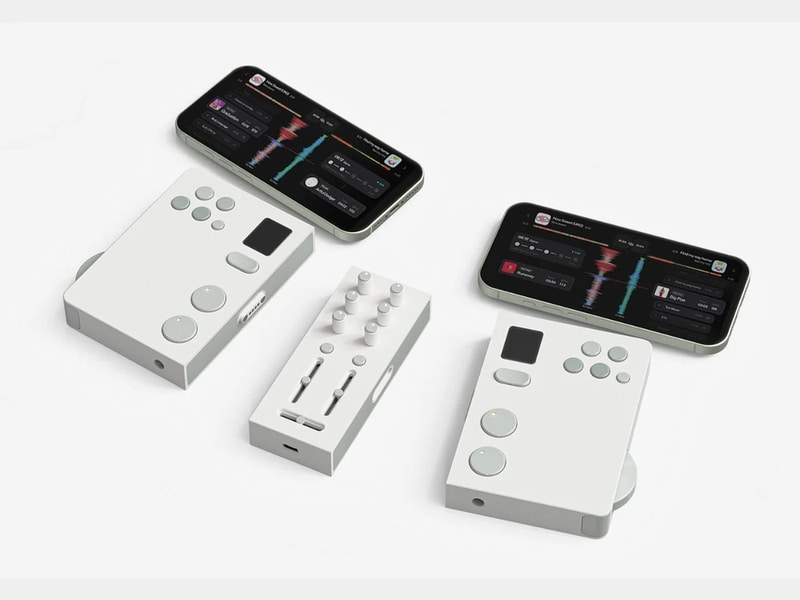
The Twin DJ concept is a modular controller system designed for two users, built from two mirrored player decks that connect to a central mixer. Each deck includes its own jog wheel, display, tempo controls, and cue functions, allowing both users to operate independently while sharing the same system. When joined, the modules form a single continuous unit; when separated, each side functions as an individual controller.
A central mixer sits between the two decks, giving both players access to EQ knobs, channel faders, and a crossfader for blending tracks in real time. The system is paired with a companion app used for music discovery, set preparation, and matching users with similar or complementary tastes. The hardware uses a minimal layout with reduced controls compared to traditional DJ equipment, focusing on core functions such as play, cue, tempo, and hot keys.
Image Credit: Eunjung Jang, myyung kyun seo, workplace 42, kmuid graduate
What Makes This Trend Stand Out
- Modular Collaborative Hardware
- Physical modules that attach and detach to form single or dual-user systems open possibilities for reconfigurable performance hardware that blurs the line between personal devices and shared stage equipment.
- Shared Mixer Ecosystems
- A central mixer designed for simultaneous multi-operator control creates potential for networked audio hubs that coordinate inputs, permissions, and real-time blending from multiple contributors.
- App Integrated Performance Tools
- Tight integration between a companion discovery and preparation app and hardware suggests new hybrid ecosystems where cloud-curated content, matchmaking and local control converge to shape live sets.
Sectors Adopting This
- Consumer Electronics
- Compact, minimal-layout controllers that function both independently and as a combined unit indicate chances for modular product lines and accessory marketplaces that extend device lifecycles.
- Live Events and Nightlife
- Dual-operator setups that encourage collaborative performances imply reimagined stage formats and venue infrastructures accommodating multi-operator interaction and shared mixing workflows.
- Music Education and Collaborative Platforms
- Paired controllers with synced apps point toward interactive learning platforms and remote-or-local collaborative practice environments where students and instructors connect through shared hardware interfaces.