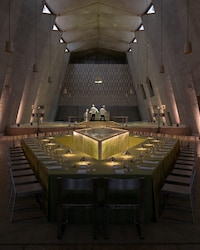
The architectural installation 'Temple (The Last Cheeseburger)' by Michael Cook Architecture & Design and G2-Studio has received the prestigious 'Prix du Jury' at Montpellier's Festival des Architectures Vives for its thought-provoking commentary on environmental sustainability.
Situated in the courtyard of France's Regional Ministry of Culture, the project visually represents the staggering 2,500 liters of water required to produce a single cheeseburger through an arresting composition of 5,000 recycled plastic bottles forming the walls of a temporary shrine. At its center lies an actual McDonald's Le Royal Cheeseburger preserved in acrylic. This detail serves as both artifact and altar within this conceptual space that speculates about a future where climate change has rendered such indulgences obsolete.
The 'Temple (The Last Cheeseburger)' installation is interactive as it invites visitors to place flowers in the empty bottles.
Image Credit: photoarchitecture.com
What's Driving This Trend
- Sustainability-centric Art Installations
- Artists and designers are increasingly focusing on sustainability in their installations to raise awareness about environmental issues in immersive ways.
- Interactive Environmental Art
- Art installations that allow audience interaction are engaging the public in discussions about climate change and resource conservation.
- Resource Consumption Awareness
- Innovative installations are spotlighting the hidden environmental costs of everyday items to educate the public on sustainable practices.
Who This Affects Most
- Architecture and Design
- Firms are integrating environmental themes into their designs to offer experiential spaces that communicate vital sustainability messages.
- Art and Cultural Institutions
- Cultural venues are hosting exhibitions that use art as a medium to discuss and visualize the impacts of climate change.
- Waste Management and Recycling
- The trend of using recycled materials in art installations is highlighting innovative approaches to repurposing waste products.