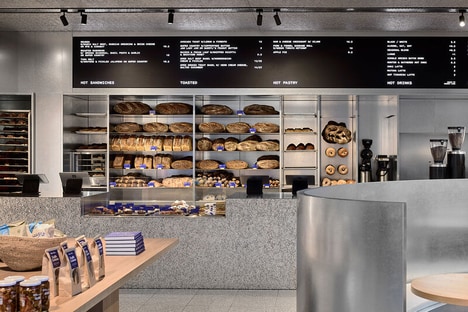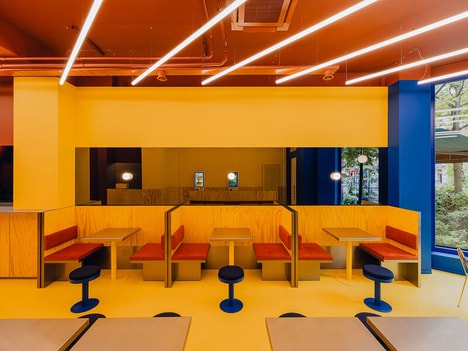
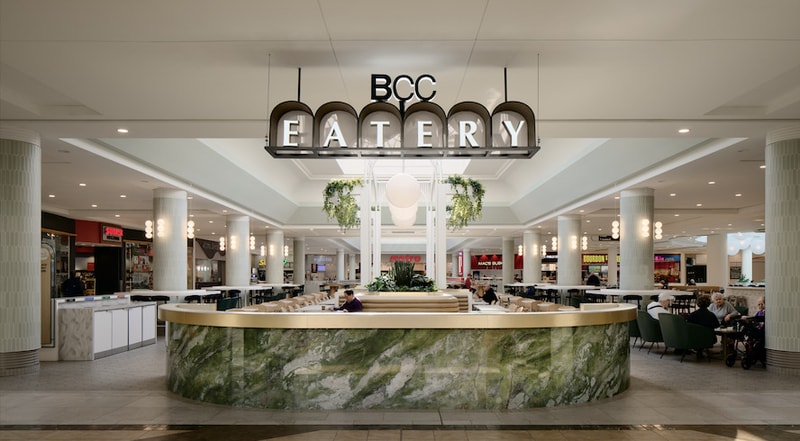
Bramalea City Centre has completed a multimillion-dollar renovation of its South Food Court. This project introduces a refreshed dining space that spans over 31,000 square feet and reconfigures the layout to improve visibility and accessibility.
The South Food Court was designed by Pappas Design Studio Inc. in collaboration with Petroff Partnership Architects. The renovated area shifts the dining destination forward toward Centre Court, allowing visitors to see the food options earlier as they walk through the main mall corridor. The aesthetic employs a clean palette of white and light wood, with layered accents in black, blue, green, caramel, and terracotta that add warmth without overwhelming the space. Custom banquettes, refined millwork, updated vendor counters, decorative lighting, and integrated greenery contribute to a cohesive atmosphere, while patterned porcelain floor tiles define two distinct dining zones and subtly guide foot traffic. Seating arrangements have been reorganized to feel more open, as well.
Image Credit: Bramalea City Centre
Key Themes Behind This Trend
- Experience-centric Dining Spaces
- A reconfigured, aesthetically cohesive food court fosters multi-sensory dining experiences that open space for branded pop-ups, experiential marketing, and hybrid retail-dining concepts.
- Visibility-driven Food Placement
- Forward-facing vendor layouts and sightline optimization amplify impulse discovery, enabling modular vendor pods and marketplace models that prioritize visibility and rotation.
- Biophilic and Natural Material Use
- Integrated greenery and warm material palettes signal a shift toward wellness-oriented environments that support longer dwell times and premium positioning for health-focused operators.
Where This Applies
- Shopping Mall Management
- Reconfigured circulation and distinct dining zones present opportunities for diversified revenue streams through flexible leasing, event programming, and incubator spaces for emerging food brands.
- Food and Beverage Vendors
- Updated vendor counters and communal seating configurations create room for micro-kitchens, shared back-of-house operations, and scalable multi-concept stalls.
- Commercial Interior Design and Architecture
- Demand for cohesive millwork, modular furnishings, and wayfinding-driven tiling patterns supports productized renovation packages and subscription-based update services.