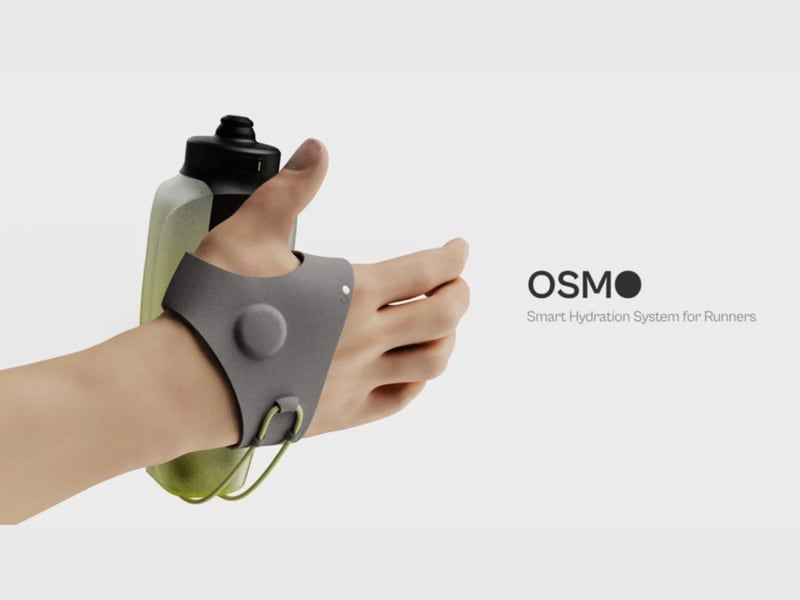
Osmo is a hydration concept developed by ArtCenter College of Design student Yash Ghule for runners. The system consists of three connected components: a wearable device, a hydration bottle, and a companion mobile application. The wrist-worn device monitors sweat rate, temperature, humidity, and drinking behavior during activity. Feedback is delivered through haptic vibration and light indicators rather than a screen. The system is designed to provide hydration guidance while minimizing distractions during a run.
The bottle incorporates an adjustable mixing mechanism that allows users to change the ratio of water and electrolytes during use. A physical slider controls the mixture without requiring additional containers or supplements. Data collected by the wearable is integrated with the companion app, which is used for setup and post-run review. The application provides hydration information and performance insights after activity.
Image Credit: Yash Ghule
Why This Trend Is Growing
- Screenless Performance Feedback
- Haptic cues and light indicators create opportunities for low-distraction fitness interfaces that guide athletes without competing for visual attention.
- Personalized Electrolyte Delivery
- Adjustable fluid mixing points to a new class of sports hydration products that tailor electrolyte intake in real time based on environmental and biometric data.
- Sweat-responsive Wearables
- Biometric monitoring tied to sweat rate, temperature, and humidity enables more precise activity support across endurance training, recovery, and heat-risk management.
Industries Being Reshaped
- Sports Technology
- Connected hydration systems expand the market for intelligent training tools that combine sensing, feedback, and performance analytics into integrated athlete ecosystems.
- Wearable Devices
- The use of subtle physical feedback highlights potential for wearables that prioritize context-aware coaching over screen-heavy interaction models.
- Functional Beverages
- Dynamic mixing mechanisms introduce possibilities for beverage platforms that shift from static formulations to adaptive nutrition during exercise.