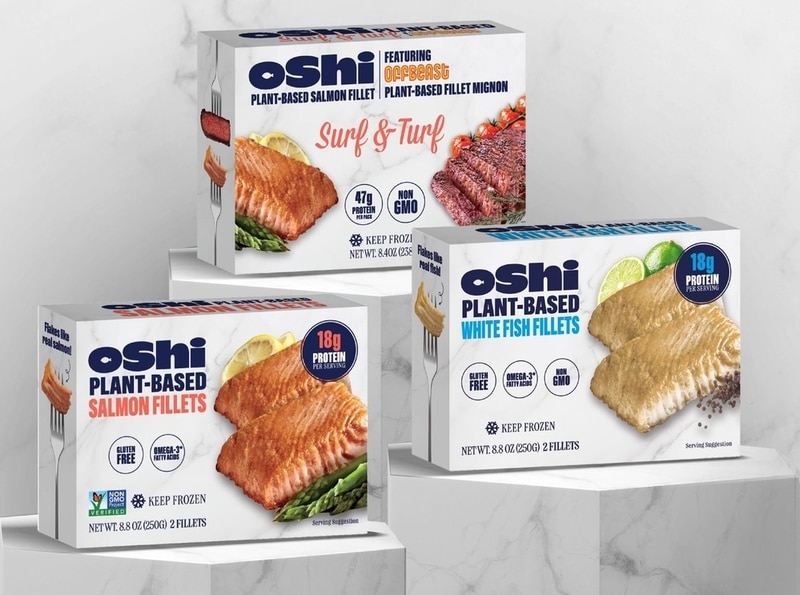
At Natural Products Expo West 2026, plant-based seafood company OSHI debuted retail packs, including a Plant-Based Salmon Fillet, a Plant-Based White Fish Fillet, and a Surf & Turf offering combining its salmon and Offbeast’s vegan filet mignon. According to the brand, the OSHI Salmon Fillet is the only option on the market that truly looks, cooks, tastes and flakes like real salmon for a more sustainable and premium alternative to fish. Thanks to a combination of soy protein, vegetable and algae oil, OSHI offers plant-based seafood that's lower in calories and has less fat than conventional salmon, plus it's abundant in Omega-3s and protein.
More than just creating great-tasting plant-based alternatives to seafood, OSHI is on a mission to eliminate sea pollution and overfishing.
Why This Trend Is Growing
- Plant-based Seafood Realism
- A consumer demand for plant-based products that authentically look, cook and flake like fish enables alternative proteins to displace conventional seafood in mainstream meal occasions.
- Algae-derived Nutrient Fortification
- The incorporation of algae oils for Omega-3 enrichment creates a pathway for plant-based items to match or exceed the nutritional profile of marine-sourced foods.
- Frozen Premium Alternatives
- Premium frozen formats that deliver restaurant-quality texture and flavor present an avenue for shelf-stable plant-based innovations to capture value in retail.
Industries Being Reshaped
- Retail Grocery
- Supermarket frozen aisles are positioned to host premium plant-based fillets that attract health- and sustainability-minded shoppers and shift purchasing patterns away from fresh fish.
- Foodservice and Restaurants
- Commercial kitchens and casual dining operators can adapt menus with realistic plant-based seafood to meet dietary preferences while reducing supply-chain exposure to overfishing.
- Sustainable Packaging and Supply Chain
- Supply-chain systems focused on low-carbon cold logistics and recyclable packaging could support wider distribution of frozen plant-based proteins while lowering environmental impact.