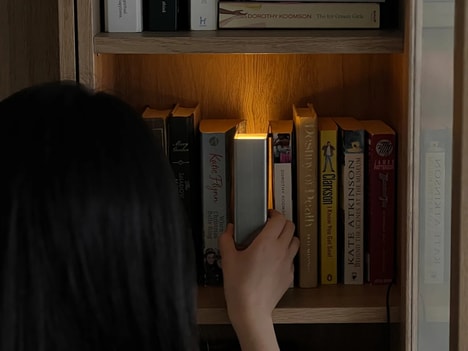
The NjommNjomm is a conceptual paper shredder designed to resemble a hardcover book placed on a shelf. Created by John Leung, the object features a rectangular book-like exterior with a row of exposed shredding teeth positioned along the open edge. Sheets of paper feed directly into the side of the object, creating the appearance that the book itself is “eating” documents as they pass through the mechanism.
The shredder uses a minimal monochrome exterior with rounded corners and a simplified spine-like profile intended to blend into bookshelves and desk environments. Its compact format allows the object to sit upright among actual books when not in use. The project combines office equipment functionality with novelty object design through its book-inspired form and visible shredding mechanism integrated into the side opening.
Image Credit: Deniz Aktay
Key Themes Behind This Trend
- Stealth Office Appliances
- Everyday devices adopting familiar household forms to blend into workspaces, creating potential for hybrid products that merge utility with unobtrusive decor.
- Form-factor Concealment
- Functional equipment disguised as benign objects is enabling a shift toward discreet workspace tools that redefine where and how equipment is placed and perceived.
- Visible Mechanism Aesthetics
- Designs that showcase moving parts as a stylistic feature are encouraging a new category of products where functionality becomes a focal point of visual identity.
Where This Applies
- Office Furnishings
- Blending furniture and devices opens room for integrated pieces that serve dual roles as storage and active equipment, altering typical office layouts and purchasing priorities.
- Document Security
- Novel form factors for shredders and secure disposals suggest opportunities for differentiated trust signals and user-facing assurance in physical data protection.
- Product Design and Manufacturing
- Aesthetic-first mechanical products indicate demand for cross-disciplinary workflows that combine industrial engineering with lifestyle-driven design, affecting prototyping and production methods.