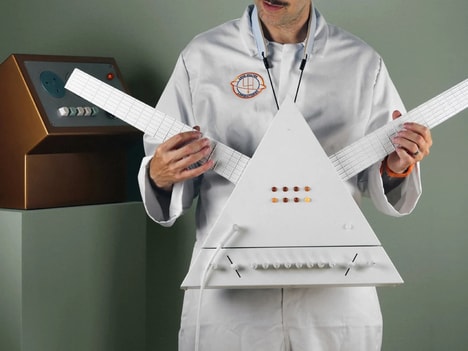
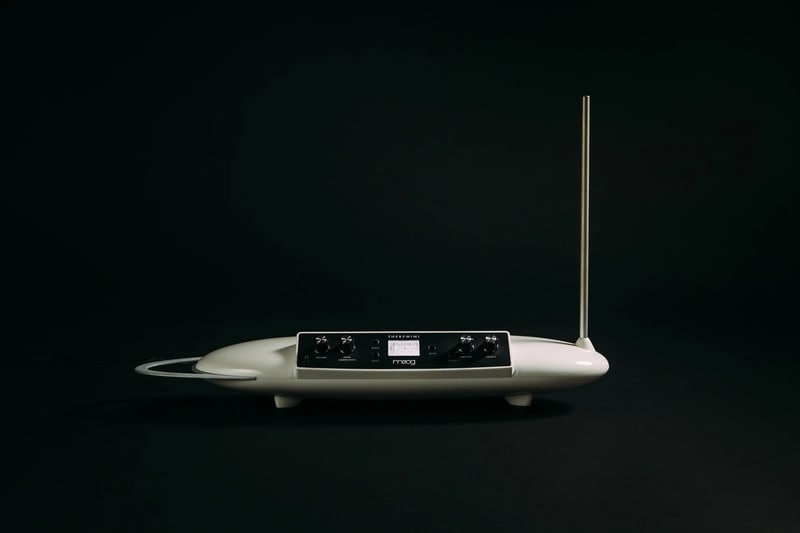
Moog’s Theremini represents a thoughtful modernization of the theremin, which is considered to be one of the earliest electronic instruments. This iteration of the instrument is engineered to make the traditionally challenging art of touchless performance accessible to a broad audience.
Moog’s Theremini retains the core, hands-free experience of its predecessor, where sound is generated by moving one’s hands near two antennas. The modernized instrument stands out by integrating a sophisticated digital sound engine borrowed from Moog’s acclaimed Animoog synthesizer.
The most significant feature for prospective users is the inclusion of an assistive pitch correction system, which allows the instrument to snap every note to a selected scale. This effectively eliminates the possibility of playing off-key. This functionality can be gradually reduced to introduce more expressive nuances like vibrato, or turned off entirely for a traditional, uncorrected theremin experience. To further support learning and development, a built-in visual tuner provides real-time feedback on the player’s hand position and the resulting pitch accuracy.
Image Credit: Moog
Key Themes Behind This Trend
- Assisted Performance Tools
- Adaptive pitch correction and real-time feedback are lowering technical barriers for expressive music creation, opening space for instruments that support beginners without limiting advanced performers.
- Touchless Music Interfaces
- Gesture-based controls are expanding beyond novelty applications into accessible creative platforms, creating new possibilities for intuitive sound design and performance experiences.
- Hybrid Heritage Instruments
- Classic analog instrument concepts paired with digital sound engines are revitalizing legacy formats for modern creators seeking familiar history with contemporary flexibility.
Where This Applies
- Musical Instruments
- Modern electronic instrument makers are finding growth in products that combine expressive authenticity with assistive technologies for broader consumer adoption.
- Music Education
- Visual tuning systems and guided correction features are reshaping how learners approach difficult techniques, making experimental instruments more practical for classrooms and self-study.
- Consumer Electronics
- Compact creative devices with embedded intelligence are blurring the line between professional music hardware and approachable home entertainment technology.