
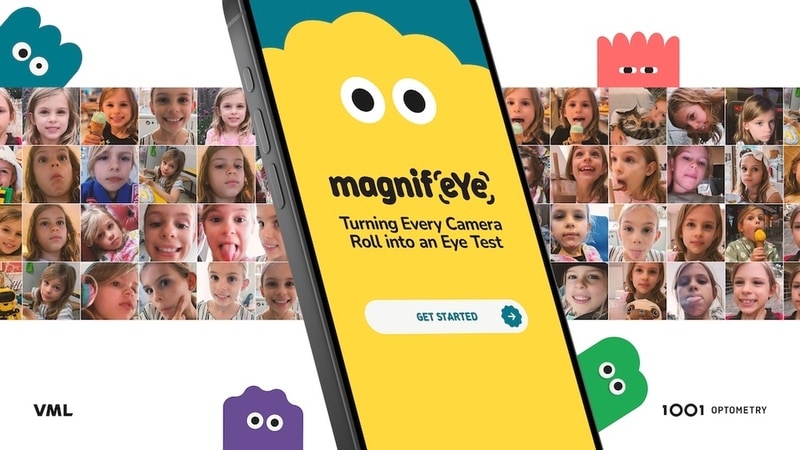
VML and 1001 Optometry came together to create Magnif-Eye, a first-of-its-kind tool that uses artificial intelligence to scan photos for early warning signs of short-sightedness in kids. The AI-powered vision screening experience is designed to scan photos on parents' phones and detect early warning signs of myopia in children—like focus-related squinting, eye protrusion and gaze asymmetry—years before most diagnoses. After flagging potential vision concerns, Magnif-eye equips parents with actionable guidance.
Magnif-Eye launched on World Optometry Day, and this simple tool makes it easier to catch potential issues early based on something many parents already do: document their child’s eye development with everyday photos. Importantly, for safety and privacy, the tool processes images without saving them or storing data.
Key Themes Behind This Trend
- AI-based Preventive Screening
- Early detection models embedded in everyday devices can shift healthcare from reactive treatment to continuous, AI-driven prevention by identifying conditions before clinical symptoms emerge.
- Privacy-preserving Edge Vision AI
- On-device inference that analyzes images without storing data creates pathways for compliant, scalable diagnostic tools that maintain user trust while delivering medical-grade insights.
- Photo-based Pediatric Diagnostics
- Leveraging routine family photos as a longitudinal data source enables nonclinical monitoring of child development metrics and the creation of low-friction screening services.
Where This Applies
- Pediatric Healthcare
- Integrating AI screening into pediatric workflows could reduce missed early diagnoses and reframe routine checkups around continuous remote monitoring data.
- Consumer Tech - Smartphones
- Smartphone manufacturers and app ecosystems stand to transform handset cameras into distributed health sensors that deliver personalized diagnostics without additional hardware.
- Optometry Services
- Eye care providers can expand reach and triage efficiency by incorporating automated photo-analysis tools that identify at-risk patients earlier in the care pathway.