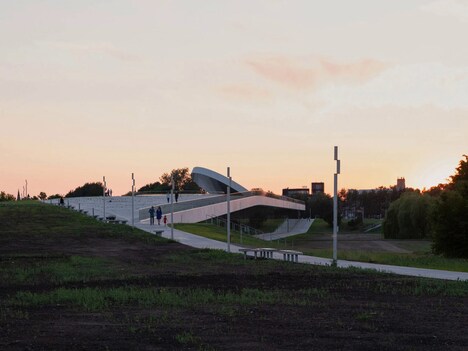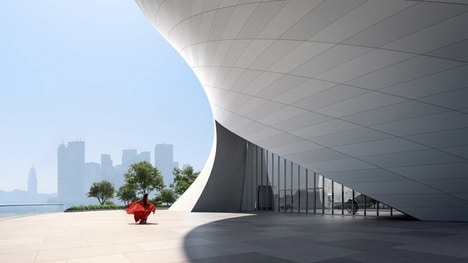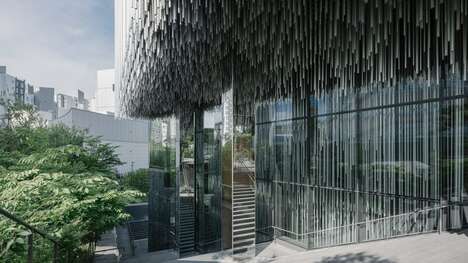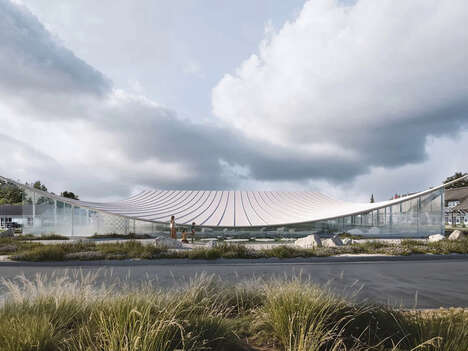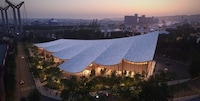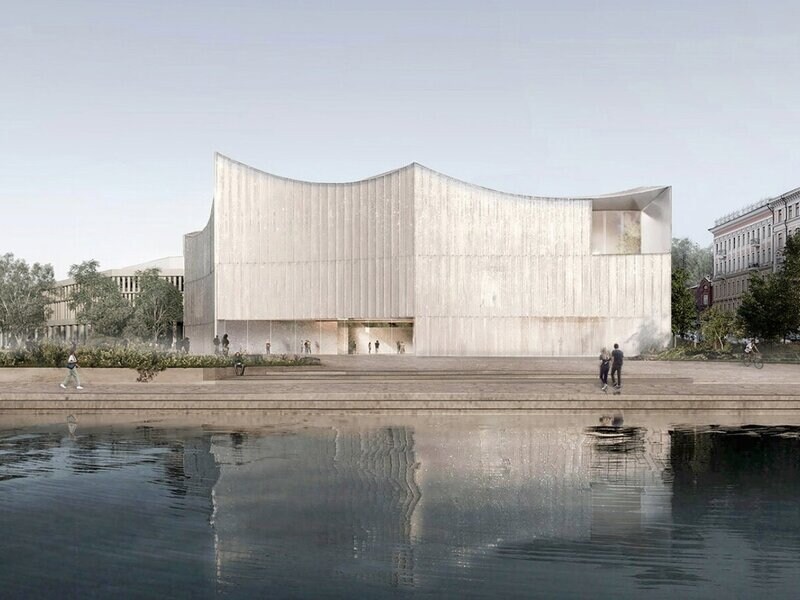
The Helsinki Design and Architecture Museum is envisioned as a translucent public pavilion through a proposal by Cossement Cardoso that wraps the structure in textured glass. Its façade softens daylight while protecting the interior from glare, and the arched roof echoes ship sails while creating shaded outdoor terraces. Rainwater is redirected through concealed channels, and structural curves allow a fluid transition between indoor and outdoor public zones.
The concept organizes circulation around a central spine, with modular galleries and flexible space for exhibitions, events, and community access. Public cafés, design labs, and harbor-facing terraces add civic value while anchoring the site within Helsinki’s waterfront. Environmental systems are integrated discreetly into the architecture, including high-efficiency glazing and passive design features. As a cultural investment, the museum would reflect both national design heritage and the city’s commitment to future-forward public architecture.
Image Credit: Imagens Do Bernardo
Key Themes Behind This Trend
- Translucent Architecture
- The use of textured glass as a main architectural element offers innovation in how buildings can delicately balance aesthetics and natural light regulation.
- Adaptive Public Spaces
- Integrating modular and flexible spaces in public buildings introduces new opportunities for dynamic community engagement and multi-functional design.
- Sustainable Rainwater Management
- Incorporating hidden channels for rainwater redirection illustrates advancements in environmentally responsive architectural design.
Where This Applies
- Architectural Design
- Exploring translucent materials in structural design can revolutionize the way architects integrate natural light and visibility in public structures.
- Urban Development
- The creation of adaptable public spaces that transition smoothly between indoor and outdoor areas presents fresh pathways for urban planning practitioners.
- Sustainable Building Materials
- The emphasis on high-efficiency and passive design elements in construction underscores an industry pivot towards sustainable building practices.