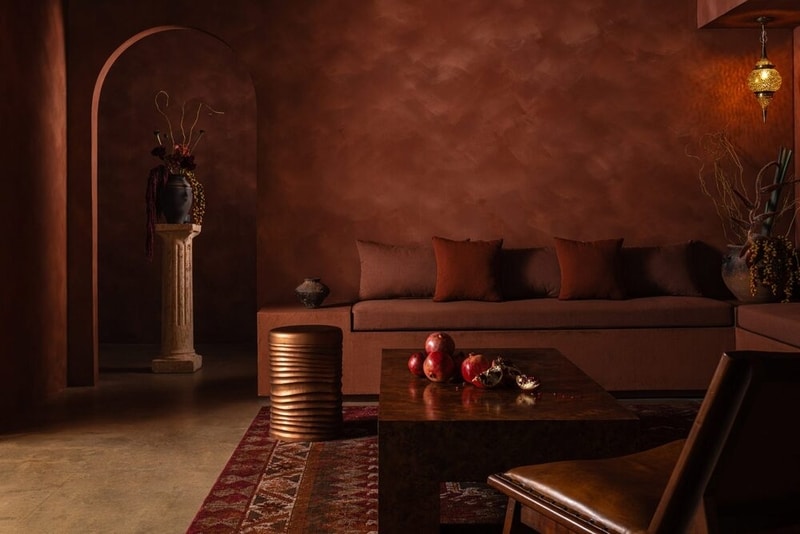
The Haram Haram tattoo parlour in Miami is an interior project by Chimera Design that reimagines the tattoo studio as a calm, ritual-like environment. The Haram Haram tattoo parlour features sculptural plaster walls and curved surfaces inspired by desert landscapes, creating interiors that resemble soft sand dunes rather than a conventional commercial space. The studio combines tattoo workstations with gallery-like areas for art and design objects, reflecting the founders’ intention to create a multidisciplinary creative space.
The design emphasizes a quiet, contemplative atmosphere through minimal furnishings, neutral tones, and sculptural lighting. Arched niches and built-in seating are carved into the plaster walls, reinforcing the fluid architectural language across the studio. Founded by artists Natashia El-Badewi and Bryan Perez, Haram Haram operates as both a tattoo studio and cultural art space that bridges tattooing with fine art, fashion, and design.
Image Credit: Jeanne Canto
Why This Trend Is Growing
- Biomorphic Interior Design
- Spaces shaped by organic, dune-like forms and sculptural plastering create opportunities for brands to differentiate physical experiences through tactile, nature-inspired architecture.
- Multidisciplinary Creative Hubs
- Blending tattooing with gallery, fashion, and design programming enables hybrid venues that reframe service spaces as cultural incubators and revenue-diverse platforms.
- Meditative Commercial Spaces
- Quiet, ritual-like atmospheres with minimal furnishings and neutral palettes open pathways for commerce that prioritizes contemplation and longer customer engagement cycles.
Industries Being Reshaped
- Tattoo and Body Art
- Tattoo studios evolving into curated art spaces suggest models where commissioning, merchandising, and exhibitions converge to elevate perceived value and client experience.
- Hospitality and Wellness
- Boutique hotels and wellness centers adopting sculptural, calming interiors can redefine guest stays as restorative rituals rather than transactional visits.
- Retail and Flagship Stores
- Flagship retail environments using gallery-like displays and organic architectural elements point to retail formats that prioritize storytelling and extended in-store dwell time.