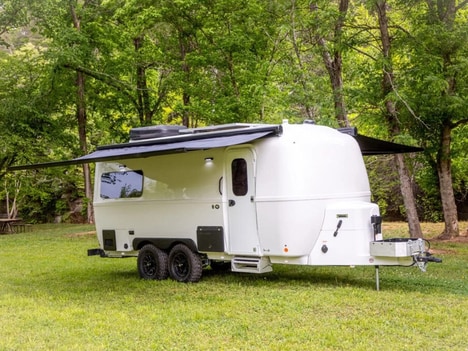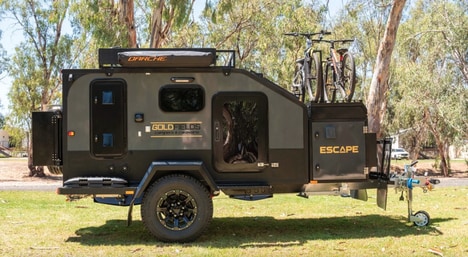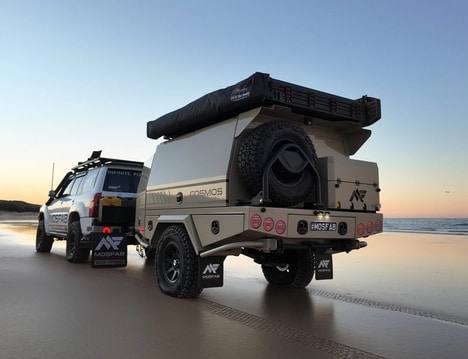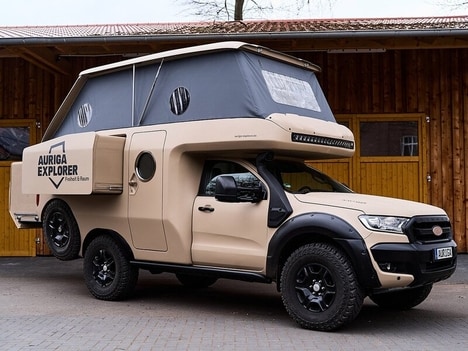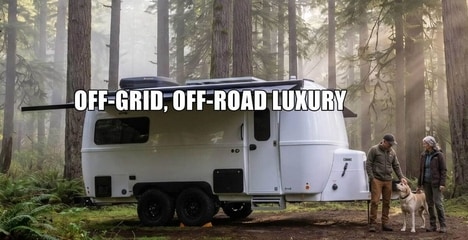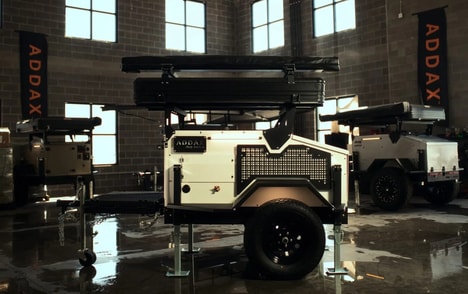
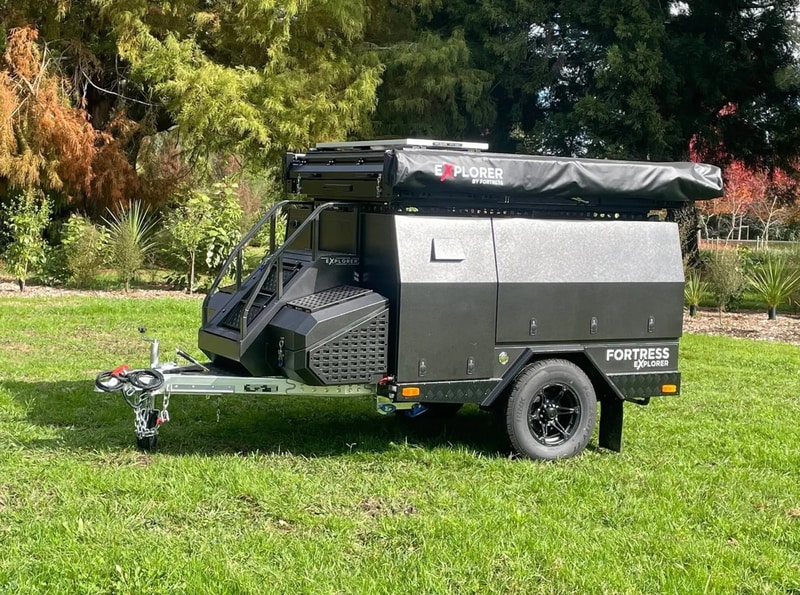
The Fortress Explorer Camping Trailer is an agile piece of equipment from the New Zealand-based Fortress Trailers that puts a hyper-durable design in the spotlight to easily withstand any adventure.
The trailer is constructed on a dual-axle trailer and boasts aluminum panels finished with anti-scratch paint to prioritize lightweight rigidity. The chassis keeps a galvanized foundation that has been hot-dipped to prioritize durability. The unit has a slide-out kitchen with ample storage space throughout and also hides advanced electrical components to offer access to a 100Ah battery with a 1,000W inverter and a solar panel setup.
The Fortress Explorer Camping Trailer comes with supplementary stairs that maximize ease of access to the rooftop tent. Priced starting at $24,350, the trailer is ripe for customization.
Image Credit: Fortress Trailers
Key Themes Behind This Trend
- Hyper-durable Adventure Gear
- Rugged equipment built with scratch-resistant finishes and galvanized structures signals growing demand for products that withstand harsher climates, longer trips, and more intensive recreational use.
- Modular Off-grid Living
- Customizable trailers with integrated kitchens, rooftop tents, batteries, inverters, and solar panels illustrate a shift toward compact mobile habitats that support self-sufficient travel.
- Lightweight Rugged Materials
- Aluminum paneling and reinforced chassis construction show how advanced material choices can merge portability with resilience for next-generation outdoor mobility products.
Where This Applies
- Outdoor Recreation
- Adventure travel brands are increasingly shaped by consumers seeking durable, customizable equipment that expands access to remote camping without sacrificing comfort or convenience.
- Automotive Manufacturing
- Trailer makers and mobility suppliers are finding new value in specialty vehicle platforms that combine agile towing, reinforced construction, and lifestyle-focused configurations.
- Renewable Energy
- Portable solar and battery systems embedded into recreational vehicles point to broader opportunities for compact energy infrastructure across off-grid leisure and emergency-use markets.