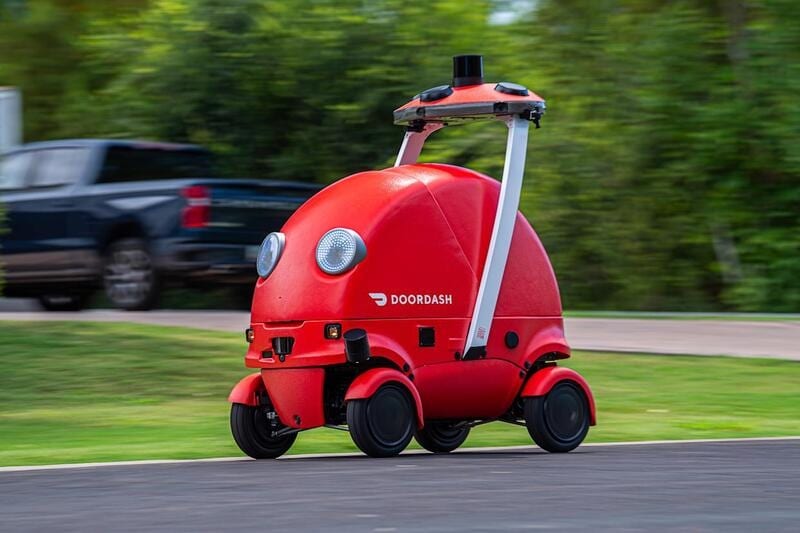
At the Dash Forward event, focused on the future of local commerce and delivery, DoorDash Dot was unveiled a next-gen delivery robot powered by its autonomous delivery platform. DoorDash's Dot was developed entirely in-house by the DoorDash Labs team and is the first commercial autonomous delivery robot specifically designed for local delivery that can travel seamlessly, navigating bike lanes, roads, sidewalks and driveways.
The agile, all-electric Dot can reach speeds of up to 20 mph and will help to reduce congestion and emissions. “You don’t always need a full-sized car to deliver a tube of toothpaste or pack of diapers. That’s the insight behind Dot,” said Stanley Tang, Co-Founder and Head of DoorDash Labs.
DoorDash has its sights set on establishing the world’s most comprehensive delivery ecosystem and is advancing its mission with an early access program in Tempe and Mesa, Arizona.
What Makes This Trend Stand Out
- Sustainability-driven Delivery
- The widespread adoption of all-electric robots like Dot can significantly lower urban congestion and emissions, contributing to eco-friendly city logistics.
- Autonomous Neighborhood Navigation
- Technological advancements in autonomous systems allow delivery robots to seamlessly navigate complex urban environments, enhancing efficiency in local deliveries.
- Miniaturization of Delivery Solutions
- The development of smaller, agile delivery robots like Dot minimizes the need for large vehicles, presenting a new approach to last-mile delivery services.
Sectors Adopting This
- Urban Mobility Solutions
- The integration of delivery robots into urban transportation networks opens up new opportunities for redefining local logistics and infrastructure.
- Autonomous Vehicle Development
- The focus on neighborhood-specific autonomous delivery vehicles expands the scope of innovation in self-driving technology beyond traditional passenger cars.
- Sustainable Logistics
- Emerging demand for eco-friendly delivery solutions drives innovation in logistics industries as businesses pivot towards reduced-environmental-impact models.