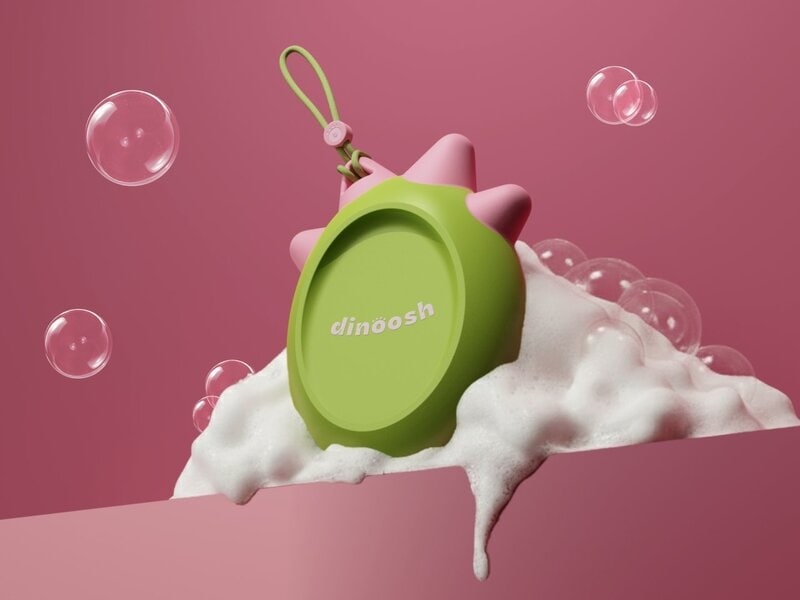
Dinoosh turns handwashing into playful hygiene for kids through a palm-sized soap tool created by designers Aarya Ghule and Tejas Vashishtha. The device dispenses foamy paw-print shapes that encourage children to rub their hands thoroughly, transforming a routine task into a small moment of play. Its rounded form fits comfortably in small hands, and the textured surface helps generate lather without requiring excessive pressure.
The internal mechanism meters out consistent soap portions so the experience feels repeatable and intuitive. A thermochromic outer shell gradually shifts color as washing continues, guiding children toward a full cleaning cycle without timers or instructions. The design focuses on habit-building by making the required motions naturally rewarding. Bright color options and simple contours keep the product friendly and approachable while remaining easy to clean after use.
Image Credit: Aarya Ghule, Tejas Vashishtha
What Makes This Trend Stand Out
- Interactive Hygiene Products
- Innovative soap dispensers that incorporate playfulness and interaction transform mundane hygiene tasks into enjoyable experiences for children, fostering better hygiene habits.
- Thermochromic Consumer Goods
- Products that change color based on temperature create new avenues for interactive and educational experiences, particularly appealing to younger audiences.
- Hands-on Learning Tools
- Designing everyday products that encourage tactile interaction and learning can engage children in educational activities while performing routine tasks.
Sectors Adopting This
- Children's Hygiene
- The development of playful and interactive hygiene products presents an opportunity to enhance children's personal care routines, making them both enjoyable and effective.
- Educational Toy Sector
- Integrating educational tools into daily-use products merges playful learning with practicality, expanding the scope of the traditional toy industry.
- Sensory Design Tools
- The use of sensory cues like texture and temperature-changing materials in product design offers potential for engaging consumer interaction and feedback.