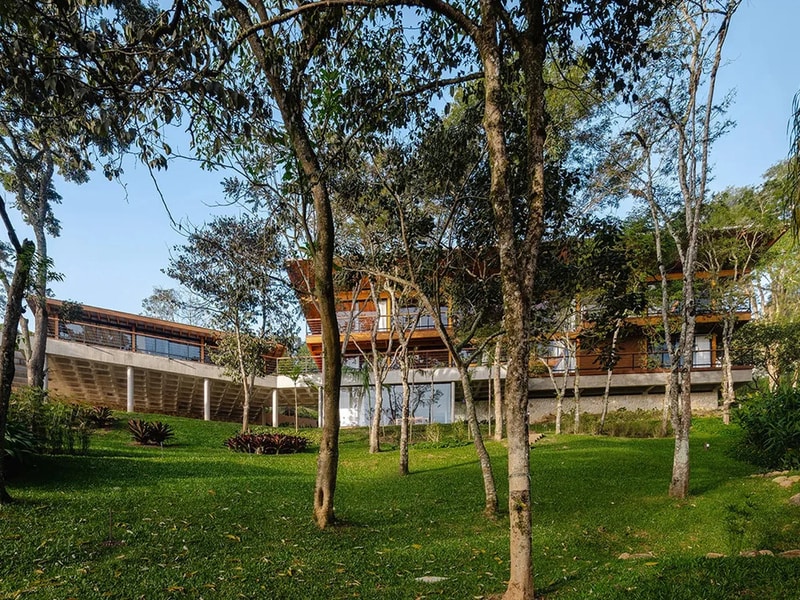
Casa Pinhal by Sabella Arquitetura is a raised residential structure built within a forested site in Brazil. The home is elevated on slender concrete supports that minimize direct contact with the uneven terrain while allowing vegetation and water flow to remain largely undisturbed beneath the structure. Its elongated form features exposed concrete, dark metal framing, and large glass openings oriented toward surrounding trees and distant landscape views. Covered outdoor terraces extend from the main living spaces, creating shaded transitional areas along the perimeter of the house.
The main interior uses an open-plan arrangement with wood-lined ceilings and floor-to-ceiling glazing that connects the rooms to the surrounding forest. Sabella Arquitetura designed the residence to follow the site’s natural slope instead of reshaping the terrain through extensive excavation.
Image Credit: Cornetta Arquitectura
Why This Trend Is Growing
- Elevated Forest Houses
- Raised dwelling designs that preserve undergrowth by lifting living spaces above sloped terrain suggest new possibilities for low-footprint habitation in sensitive ecosystems.
- Minimal-impact Structural Supports
- Use of slender concrete piers and concentrated foundations reduces ground disturbance and points toward structural systems optimized for fragile landscapes and flood-prone sites.
- Biophilic Open-plan Integration
- Floor-to-ceiling glazing and wood-lined interiors that visually and spatially merge indoors with forested surroundings indicate growing demand for architecture that enhances human-nature connectivity.
Industries Being Reshaped
- Residential Architecture
- Design firms specializing in hillside and woodland homes encounter opportunities to redefine luxury and sustainability through elevated, site-responsive residences.
- Prefabricated Concrete Systems
- Manufacturers of modular concrete supports and lightweight structural elements stand to influence construction on uneven sites by enabling faster, less invasive assembly methods.
- Ecotourism and Retreat Development
- Developers of nature-based lodging and wellness retreats can leverage elevated, minimally disruptive buildings to create immersive guest experiences with reduced environmental impact.