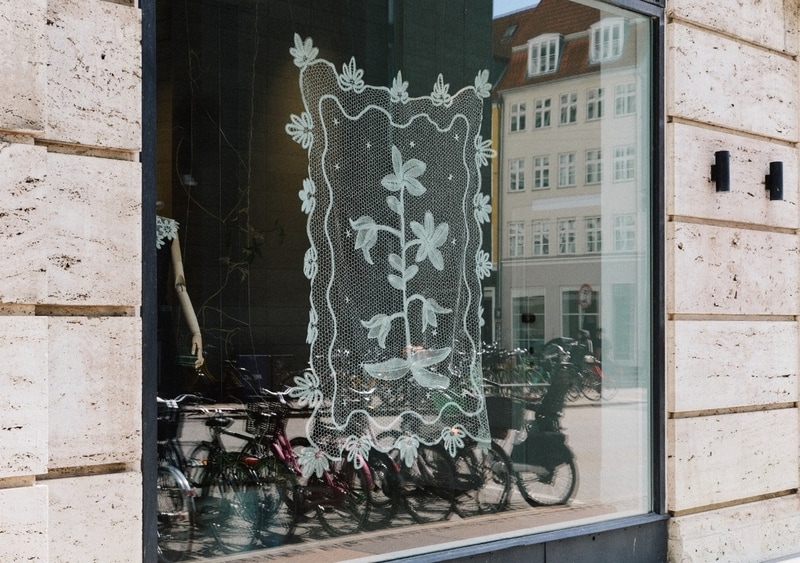
The Baum und Pferdgarten lace installation debuted during 3daysofdesign 2026 inside the fashion label's Copenhagen flagship through a collaboration with Polish designer Zofia Chylak. The installation creates a sculptural entryway using traditional bobbin lace techniques interpreted at an architectural scale. The net-like textile features white horse and floral motifs suspended against a cherry-red doorway, referencing the brand's name while connecting Danish and Polish craft traditions. Chylak developed the work after researching equestrian imagery at Copenhagen's Thorvaldsens Museum.
The installation also reflects Chylak Heritage, a recent accessories collection inspired by Polish artisanal techniques including amber beading, Wilanów-style embroidery and Bobowa bobbin lace. The oversized textile emphasizes handcrafted lace through enlarged proportions while preserving intricate floral detailing across the surface. The temporary display occupied the Baum und Pferdgarten flagship throughout the annual design festival,
Image Credit: MVPR, Piotr Maiaszek
What's Driving This Trend
- Architectural Lace
- Traditional lacework scaled into spatial installations signals potential for heritage textiles to become immersive branded environments in retail and hospitality settings.
- Craft-led Retail Entrances
- Storefronts that incorporate artisanal motifs and handmade construction create differentiated physical touchpoints as brands seek more memorable alternatives to conventional visual merchandising.
- Cross-cultural Textile Storytelling
- Blending Danish fashion identity with Polish craft traditions highlights how regional techniques can evolve into contemporary design narratives with collectible and experiential value.
Who This Affects Most
- Fashion Retail
- Flagship stores are becoming stages for temporary craft installations that deepen brand mythology and turn in-person shopping into a culturally driven experience.
- Interior Design
- Large-scale textile structures introduce softer architectural elements for commercial spaces, expanding the role of decorative craft beyond surface ornamentation.
- Heritage Crafts
- Artisanal techniques such as bobbin lace, embroidery and beading are gaining renewed relevance through collaborations that translate historic skills into premium contemporary formats.