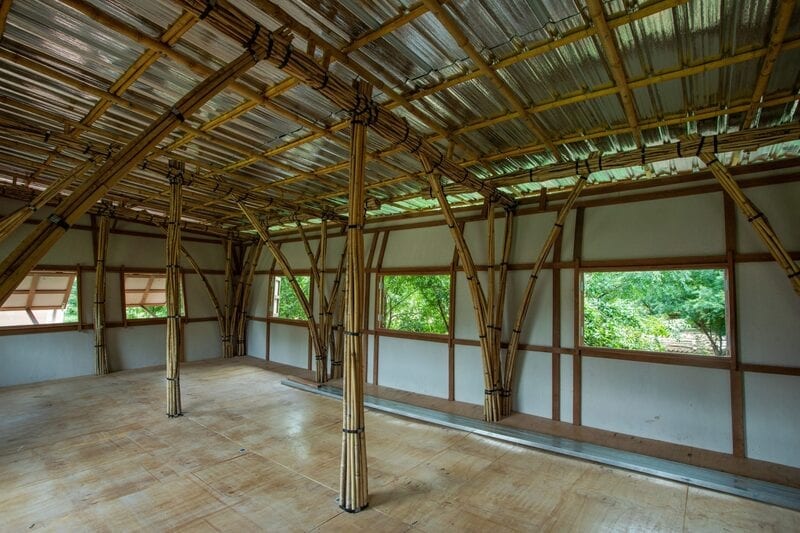
Housing NOW is a modular bamboo housing system developed by Yangon-based studio Blue Temple to provide rapid, affordable homes in Myanmar’s conflict- and disaster-affected regions. The project uses small-diameter bamboo bundled into structural frames that interlock to form the backbone of each house. This method uses abundant, low-value bamboo culms from local sources and transforms them into load-bearing construction elements through bundling, bracing and jointing techniques.
Housing NOW units are designed to assemble in a short timeframe on site with basic tools and local labour participation. The housing system prioritises simplicity, resilience and adaptability. Frames are prefabricated using a structured process, then transported to sites where families and trained builders erect them together. The resulting structures provide raised floors and ventilated spaces suitable for the region’s climate, and the modular nature allows variations in layout or façade treatment.
Image Credit: Aung Htay Hlaing
What Makes This Trend Stand Out
- Eco-friendly Construction Materials
- The use of local, sustainable resources like bamboo in construction offers an environmentally conscious alternative to traditional building materials.
- Rapid Modular Housing
- Modular housing systems enable swift assembly and adaptability, ideal for addressing urgent housing needs in disaster-stricken areas.
- Community-driven Construction
- Empowering local communities to participate in the building process fosters self-sufficiency and leverages local skills and labor.
Sectors Adopting This
- Construction
- Innovations in modular and sustainable building technologies are transforming the construction industry by emphasizing speed, cost-efficiency, and environmental impact.
- Disaster Relief
- Disaster relief sectors benefit from rapid deployment housing solutions that offer quick shelter to affected populations using locally sourced materials.
- Sustainability
- The sustainability industry gains momentum with new methods that turn low-value natural resources into valuable construction components.