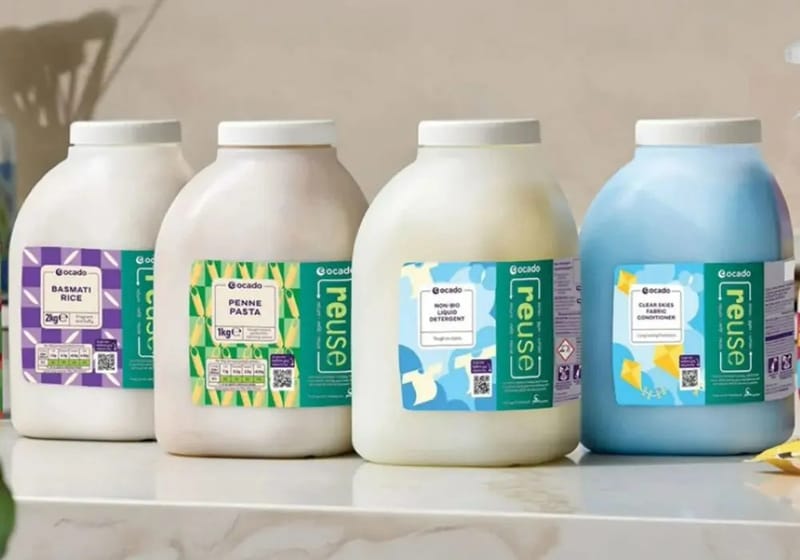
Amcor and Ocado have partnered for a reusable packaging trial that's being run in partnership with the Refill Coalition and facilitated by GoUnpackaged to showcase the potential for refillable packaging within the grocery category.
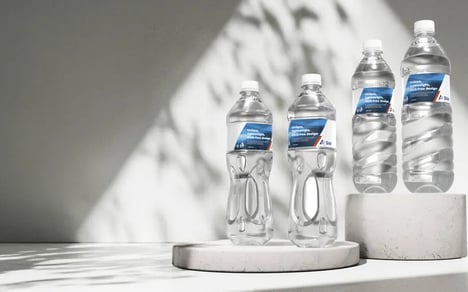
The project sees Ocado working to reduce its packaging waste, while also cutting the extended producer responsibility (pEPR) costs and strengthening its position in the UK grocery sector as a sustainability leader. Amcor's part in the trial also saw it create two bespoke containers including a wide opening, two-kilogram vessel for dry goods use and a three-kilogram version with a narrow neck for liquids. Both packaging solutions are rated to withstand hot washing and have no trap points that could inhibit proper cleaning.
General Manager of Blow Moulding Specialties at Amcor and member of the Refill Coalition advisory panel Florent Souty spoke on the Amcor and Ocado packaging trial saying, "We’re proud to be involved in a project that looks to redefine the nature of packaging for the future. By proving the potential for large-scale infrastructure, and planting the seeds for changes to consumer behaviour, we can support the latest findings from GoUnpackaged and its partners in the Refill Coalition.”
What Makes This Trend Stand Out
- Refillable Grocery Packaging
- A shift toward store-supported refill systems that replace single-use items could enable scalable circular supply chains for mainstream grocery products.
- Hot-washable Durable Containers
- Containers designed for repeated hygienic cleaning and thermal resilience present opportunities to extend product life cycles and reduce per-unit lifecycle emissions.
- Retail-producer Collaboration
- Integrated partnerships between retailers and packaging manufacturers are creating co-developed solutions that align operational workflows with sustainable design requirements.
Sectors Adopting This
- Grocery Retail
- Supermarkets adopting reusable packaging models may redefine store logistics, inventory flows, and customer engagement around product refills and returns.
- Packaging Manufacturing
- Producers that design robust, easily sanitized, and returnable vessels can capture new business models focused on product-as-a-service rather than one-way sales.
- Waste Management & Recycling
- Systems for collection, sanitization, and redistribution of reusable containers could transform downstream waste streams and alter municipal recycling economics.