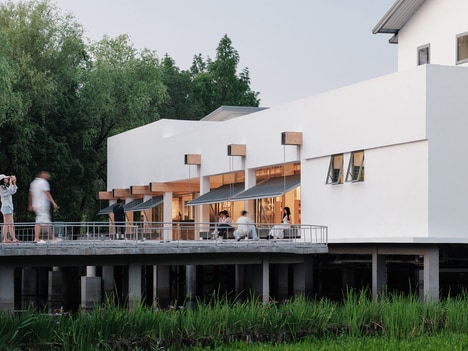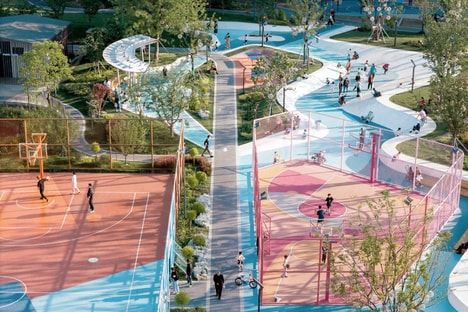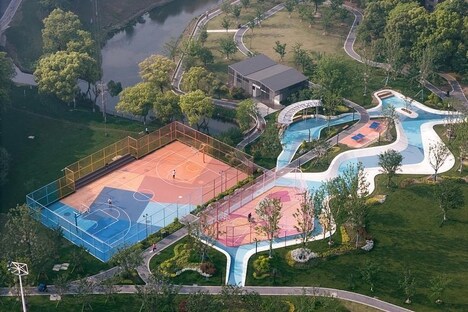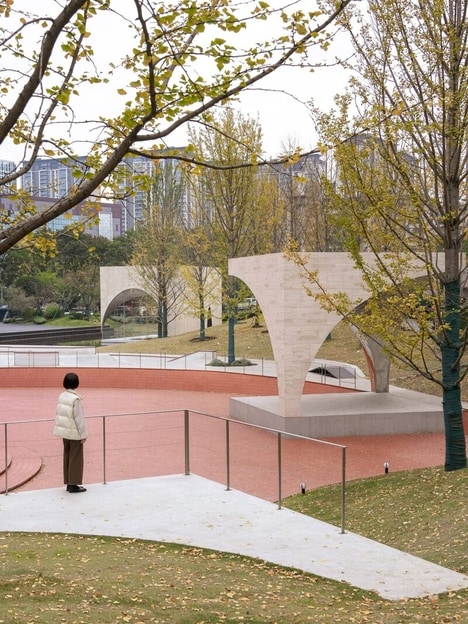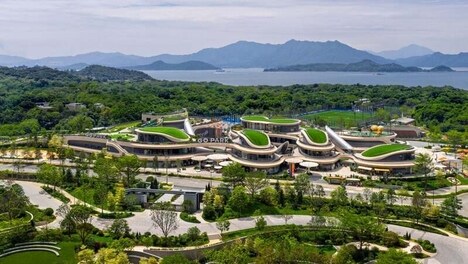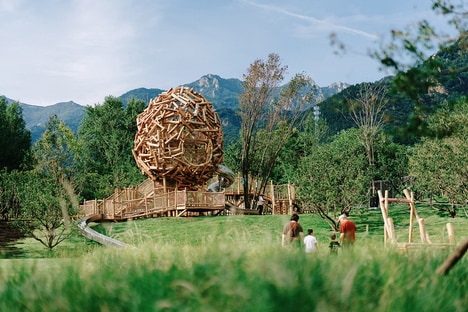
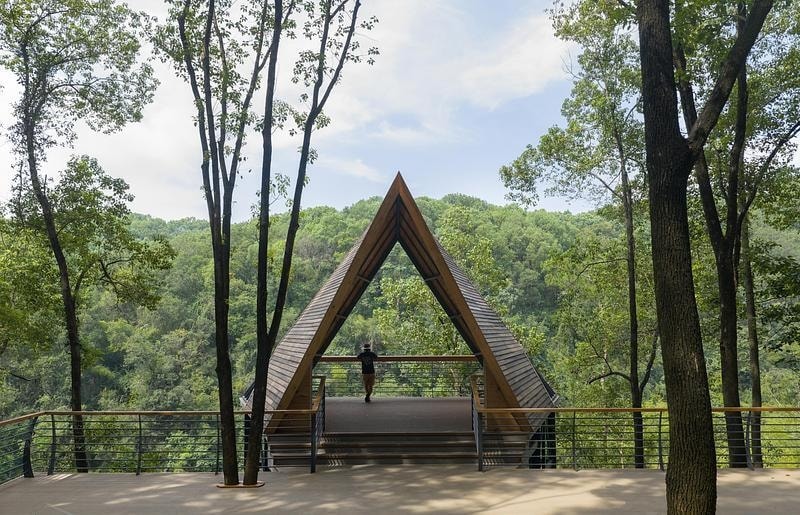
HID Landscape Architecture has realized the Xiaoxita Forest Park in Yichang — a significant 89-hectare project that revitalizes a long-neglected woodland along the Huangbai River into a model of sustainable landscape regeneration while balancing public recreation with biodiversity conservation.
The Xiaoxita Forest Park stands as an urban green lung that can welcome over 2,000 visitors daily. Prior to HID Landscape Architecture's intervention, the site was burdened by chaotic pathways, outdated infrastructure, and ecological fragmentation. The design team addressed these problems through a philosophy of minimal intervention that prioritizes the existing natural systems above all else.
The most striking achievement of HID Landscape Architecture's project is its unwavering commitment to preserving 100% of the site's native trees. Pathways and activity zones were carefully woven into existing clearings to avoid unnecessary earthworks and protect the established root systems.
Image Credit: HID Landscape Architecture
Why This Trend Is Growing
- Minimal-intervention Regeneration
- Low-impact design methods are redefining park renewal by preserving existing ecosystems while upgrading public access and usability.
- Urban Biodiversity Parks
- City green spaces that prioritize native habitats alongside recreation create new value in climate resilience, wellness, and ecological education.
- Root-safe Pathway Design
- Infrastructure planned around mature tree systems signals emerging potential for construction techniques that reduce environmental disruption in public landscapes.
Industries Being Reshaped
- Landscape Architecture
- Nature-first planning models are expanding the role of designers in transforming neglected land into multifunctional ecological assets.
- Urban Planning
- Public space strategies that combine high visitor capacity with habitat protection point to new approaches for sustainable city growth.
- Sustainable Infrastructure
- Regenerative park upgrades highlight demand for materials, pathways, and site systems that support access without degrading natural environments.