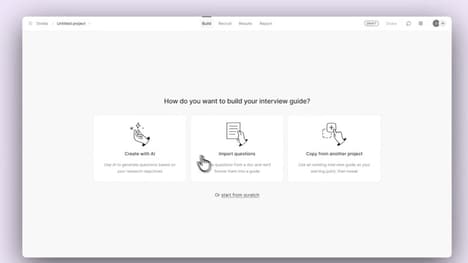
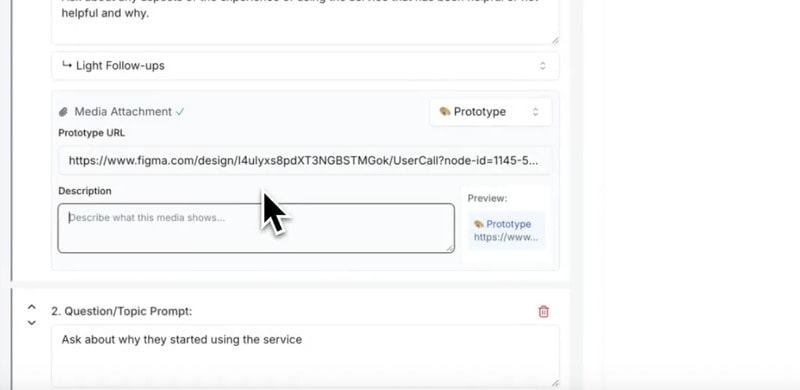
UserCall is an AI-driven user research platform designed to streamline qualitative data collection through automated voice interviews. The tool allows teams to create custom AI interviewer links that users can access on demand, enabling more flexible and frequent research sessions without scheduling constraints.
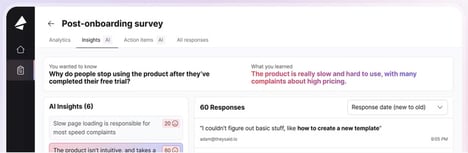
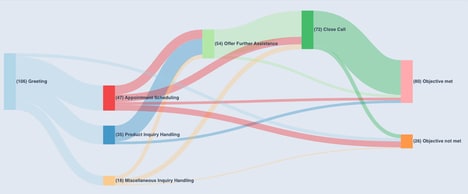
Interviews are moderated by AI, which guides conversations based on predefined objectives while capturing structured qualitative insights. From a business perspective, UserCall reduces the time, cost, and coordination typically required for user interviews, making continuous research more accessible to product teams, startups, and organizations. The platform also supports qualitative analysis by organizing and summarizing responses, helping teams identify themes and user needs more efficiently. By automating interview execution while preserving depth of insight, UserCall enables scalable user research that can inform product decisions, experience design, and strategic planning.
Image Credit: UserCall
What Makes This Trend Stand Out
- AI-moderated Interviews
- AI-driven moderation enables consistent, bias-reduced interview protocols that can produce higher-quality comparative insights across large participant sets.
- On-demand Qualitative Research
- Immediate, link-based interviews remove scheduling friction and allow continuous sampling of user sentiment across product lifecycles.
- Scalable Qualitative Analysis
- Automated summarization and theme extraction convert unstructured interviews into structured insight datasets suitable for trend detection and cross-cohort comparison.
Sectors Adopting This
- Product Management
- Product teams gain access to near-real-time user feedback that can refine roadmaps and prioritize feature trade-offs with richer contextual understanding.
- User Experience Design
- UX practices can leverage dense qualitative signals to validate design hypotheses and surface nuanced pain points across diverse user segments.
- Market Research
- Traditional research models may be transformed by high-frequency, voice-based qualitative panels that produce longitudinal behavioral and attitudinal datasets.