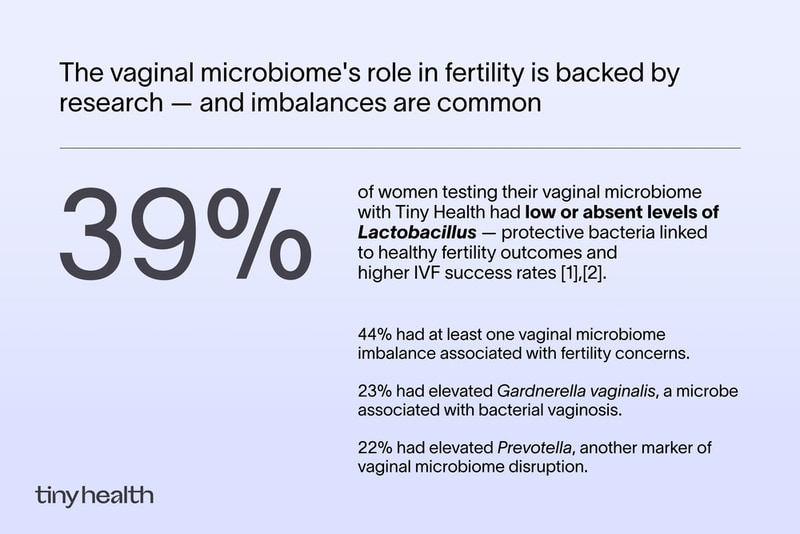
Tiny Health has released an analysis of its vaginal microbiome testing data showing that 39% of women had low or absent levels of Lactobacillus bacteria. These organisms are known to maintain an acidic environment that protects the reproductive tract from harmful microbes. Tiny Health’s research also showed that nearly half of test subjects had at least one microbiome imbalance associated with fertility concerns, including elevated Gardnerella vaginalis and Prevotella, which are linked to reduced chances of natural conception and lower success rates with assisted reproductive technologies like IVF.
Infertility affects roughly one in five women of reproductive age in the United States, and the search for answers can be a long, expensive, and emotionally exhausting process involving hormone tests, ultrasounds, genetic screening, and often invasive procedures. The vaginal microbiome is rarely assessed, and as such, Tiny Health’s findings may be of interest to many, as the company’s service offers a new avenue to explore.
Image Credit: Tiny Health
Why This Trend Is Growing
- Microbiome-based Fertility Screening
- A growing body of evidence links specific vaginal microbiome profiles to conception rates and IVF outcomes, indicating diagnostic opportunities beyond hormonal and genetic tests.
- Personalized Microbial Therapeutics
- Targeted probiotics and live biotherapeutic products designed to restore Lactobacillus-dominant communities are emerging as potential alternatives to broad-spectrum antibiotics.
- Home-based Molecular Diagnostics
- At-home sampling combined with lab-grade sequencing is enabling scalable, patient-friendly detection of microbes like Gardnerella and Prevotella that correlate with reproductive health risks.
Industries Being Reshaped
- Women's Health Diagnostics
- Diagnostics firms that incorporate microbiome panels alongside hormonal and genetic assays could disrupt standard fertility workups by revealing overlooked microbial contributors to infertility.
- Fertility Clinics and IVF Providers
- Reproductive centers integrating microbiome assessment and tailored microbiota interventions might see shifts in treatment protocols and success-rate benchmarking.
- Biotherapeutics and Probiotic Development
- Companies developing defined microbial consortia or live biotherapeutics focused on restoring protective vaginal flora could create novel preventive and adjunctive reproductive therapies.