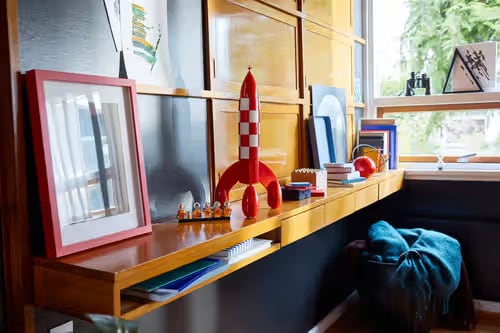
LEGO Tintin Moon Rocket is a display model released through the LEGO Ideas line inspired by Hergé’s The Adventures of Tintin series. The 1,283-piece set recreates the iconic red-and-white checkered rocket seen in the stories Destination Moon and Explorers on the Moon. Designed for adult builders, the model translates the comic spacecraft into a large brick-built structure intended primarily for display. The set includes minifigures of Tintin, Snowy, Captain Haddock, Professor Calculus, and the detectives Thomson and Thompson wearing orange space suits.
The rocket stands nearly half a meter tall and uses curved brick elements to replicate the cylindrical body and tapered nose of the original design. Interior details appear in the cockpit section beneath the nose cone, while structural Technic elements support the central frame. The rocket’s red-and-white check pattern is recreated through alternating brick sections along the fuselage. The LEGO Tintin Moon Rocket set contains 1,283 pieces and releases April 1 through LEGO
Image Credit: LEGO
Why This Trend Is Growing
- Nostalgic IP Revivals
- Revival of classic comic properties into premium physical products is creating demand for heritage-driven designs that command collector attention and higher price points.
- Adult-focused Collectible Kits
- Premium, display-oriented building sets designed for adults are shifting the market away from play-centric toys toward complex, collectible experiences with sculptural intent.
- Hybrid Analog-digital Display Models
- Physical models that celebrate tactile craftsmanship while integrating digital provenance and community storytelling are emerging as crossover objects valued by both makers and fans.
Industries Being Reshaped
- Toy Manufacturing
- High-fidelity licensed sets that prioritize accurate aesthetics and advanced engineering are enabling manufacturers to justify premium materials and specialized production runs.
- Home Decor and Collectibles
- Large-scale, displayable models are positioning themselves as lifestyle decor items that bridge the gap between fandom and interior design sensibilities.
- Entertainment Licensing
- Strategic partnerships between IP holders and product designers are turning narrative-rich franchises into enduring merchandise ecosystems with cross-market reach.