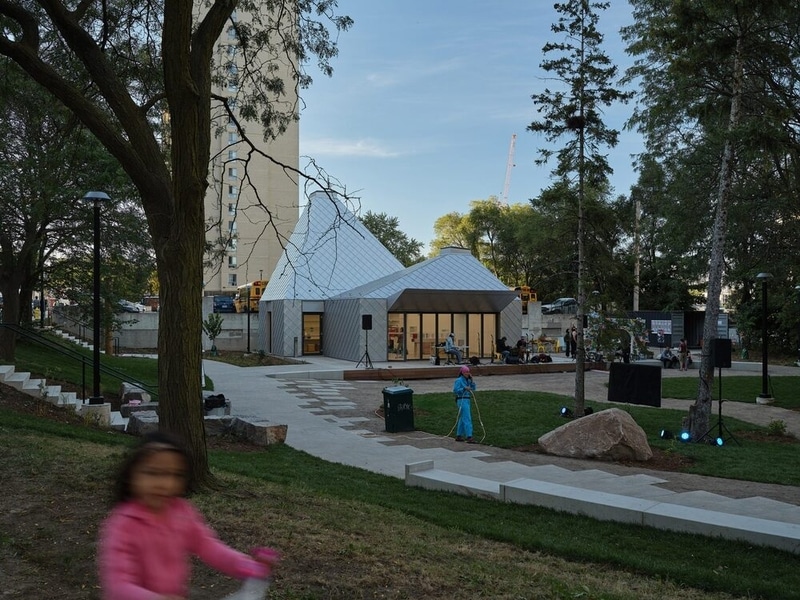
The Belle Pavilion by LGA Architectural Partners is a sculptural community building located in Mabelle Park in Toronto. The structure was developed in collaboration with local residents and the non-profit Mabelle Arts, shaping its program through community input. The pavilion functions as a multi-use space designed for activities such as workshops, performances, and shared meals. Its compact footprint includes two primary interior rooms connected by an open divider, alongside a front-facing deck that extends into the park.
The building features durable materials suited for public use, including polished concrete flooring and aluminum cladding designed to reduce maintenance and resist damage. Folding glass doors open the interior to the outdoor deck, allowing the space to operate as both an enclosed room and an open-air stage. The structure also incorporates basic amenities such as workstations, washrooms, and a kitchenette to support daily programming.
Image Credit: Younes Bouhar
Key Themes Behind This Trend
- Community-designed Public Spaces
- Design input from residents is shaping smaller civic buildings that blur the line between infrastructure and neighborhood-driven cultural hubs, enabling new models of locally tailored program delivery.
- Adaptive Micro Venues
- Compact, multi-use pavilions that convert between enclosed rooms and open-air stages are creating opportunities for flexible event ecosystems that can scale programming without large capital footprints.
- Durable Low-maintenance Materials
- Use of polished concrete and resilient cladding in high-traffic community buildings points to product and service demand for long-life, low-upkeep systems that reduce lifecycle operating costs.
Where This Applies
- Urban Planning
- Planners integrating small-scale cultural infrastructure into parks are redefining public realm strategies and enabling distributed amenity networks across dense cities.
- Cultural Programming
- Arts organizations operating out of versatile pavilions can experiment with hybrid formats of workshops, performances, and community meals that diversify revenue and engagement models.
- Modular Construction
- Prefabricated or easily assembled pavilion components are encouraging off-site production techniques that shorten delivery timelines and standardize durable finishes for public projects.