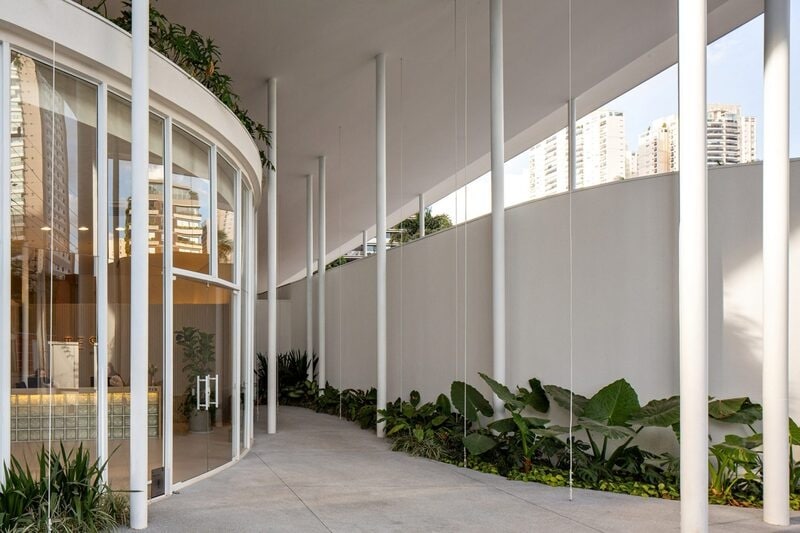
The Tess Pavilion by Estudio Leonardo Zanatta is a semi-permanent public structure in São Paulo defined by a tessellated geometric canopy that creates shaded and open spaces for social interaction. The pavilion’s roof is composed of repeated triangular modules that vary in scale and angle to shape shifting light and shadow across the ground plane. The modular geometry establishes a rhythmic surface that responds to solar orientation, providing passive environmental control through form rather than mechanical systems. Openings between modules frame views of the surrounding park and city context.
Structural elements are expressed rather than concealed, with exposed supports that articulate the pavilion’s organization and load paths. Materials are chosen for durability in outdoor conditions while maintaining a refined surface quality. The design encourages movement through and around the space, with thresholds that guide visitors between shaded seating areas and open pathways.
Image Credit: André Scarpa
What's Driving This Trend
- Modular Architecture
- Tessellated geometry in public structures offers innovative ways to manipulate light and shadow, creating dynamic environments that adapt to changing solar orientations.
- Passive Environmental Control
- Structures that utilize form-based solutions for environmental regulation reduce reliance on mechanical systems, highlighting sustainable architectural practices.
- Expressive Structural Design
- Architectural designs that reveal structural elements offer unique aesthetic opportunities, enhancing the public's engagement with the architectural form.
Who This Affects Most
- Public Infrastructure
- Incorporating innovative design elements like tessellated canopies into civic spaces revitalizes urban areas and fosters community interaction.
- Sustainable Design
- The integration of passive environmental controls in building designs contributes to sustainability by minimizing energy consumption through advanced architectural techniques.
- Outdoor Furniture and Amenities
- Developing durable materials for outdoor structures ensures longevity and resilience, aligning with the growing demand for sustainable urban furnishings.