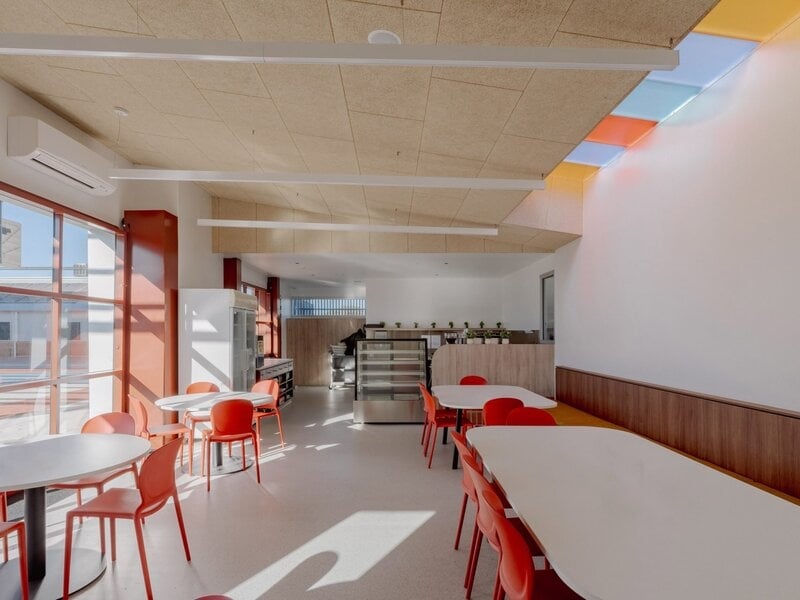
The Swan Hill Specialist School by WHDA responds to the needs of students with diverse learning profiles through flexible architecture that prioritizes sensory comfort and connection. Its plan arranges classrooms, therapy rooms, and communal areas around courtyards and shaded walkways, creating a sequence of indoor-outdoor transitions that moderate environmental stimuli. The layout supports independence while providing opportunities for guided interaction and retreat.
The vast range of material choices and proportions aims for familiarity and calm. Some of which include brick, timber, and softened glazing to temper light and texture. Gentle rooflines and covered pathways echo the scale of surrounding community buildings, encouraging accessibility and belonging. Through its thoughtful spatial layers, the school becomes a habitat adapted for learning, connection, and well-being.
Image Credit: Victor Vieux
What Makes This Trend Stand Out
- Sensory-friendly Architecture
- Designing spaces that moderate environmental stimuli through flexible architecture offers innovative methods for creating environments that support diverse learning profiles.
- Indoor-outdoor Integration
- Creating seamless indoor-outdoor transitions enhances learning environments by fostering sensory comfort and encouraging natural interactions.
- Material-driven Comfort
- Utilizing materials like brick and timber to establish familiar and calming spaces can revolutionize the design of educational facilities, making them more inclusive and welcoming.
Sectors Adopting This
- Educational Facilities Design
- This industry stands to transform by integrating architecture that accommodates diverse learning needs through spatial design and sensory considerations.
- Construction Materials Manufacturing
- Focusing on producing materials that enhance sensory comfort in architectural projects could drive innovation by aligning with emerging design trends focused on inclusivity.
- Therapeutic Spaces Development
- Designing therapeutic spaces within educational campuses that support individuals' well-being and learning needs offers opportunities for advancement in specialized facility design.