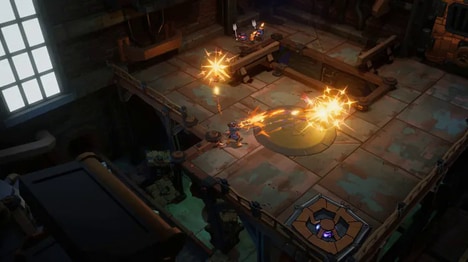

Styx: Blades of Greed is Cyanide Studios' latest entry in the stealth-action franchise, released after a nine-year gap and featuring a shift into semi-open-world design with metroidvania-style traversal. The game centers on Styx, a crafty goblin, and is built around vertical maps, exploration rewards, and a mix of stealth abilities.
Players unlock traversal upgrades like a hookshot and a parachute, plus classic stealth powers such as temporary invisibility, possession, and time-slowing, which are paced through story beats and optional unlocks. The title offers three sprawling maps—The Wall, Turquoise Dawn, and the ruined Akenash—each layered with interconnected routes, puzzles, and environmental hazards.
For players, this matters because Blades of Greed blends tight stealth encounters with freeform exploration, turning each Quartz-hunting mission into a compact stealth vignette. The result updates Cyanide's infiltration blueprint for modern open-world expectations while preserving methodical stealth gameplay and vertical platforming appeal.
Image Credit: Cyanide Studios
Key Themes Behind This Trend
- Semi-open-world Stealth
- A blend of compact stealth vignettes within larger semi-open maps creates room for emergent player-driven infiltration scenarios that reframe mission structure.
- Metroidvania Traversal Integration
- Progression gated by traversal upgrades like hookshots and parachutes enables non-linear exploration loops that shift player retention and content pacing models.
- Vertical-first Level Design
- Emphasis on layered verticality and interconnected routes generates new paradigms for environmental storytelling and encounter design prioritizing height and line-of-sight dynamics.
Where This Applies
- Game Development Tools
- Procedural and authoring tools for crafting vertical, interlinked levels become differentiators in reducing production time for complex open-stealth environments.
- Player Analytics and Retention
- Behavioral analytics focused on traversal patterns and stealth approach diversity reveal monetizable engagement segments and inform live-content tuning.
- AR/VR Hardware and Experiences
- Immersive platforms that accentuate vertical traversal and spatial stealth mechanics present opportunities to redefine presence and locomotion design in next-gen experiences.