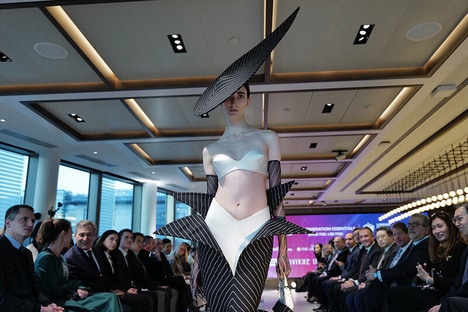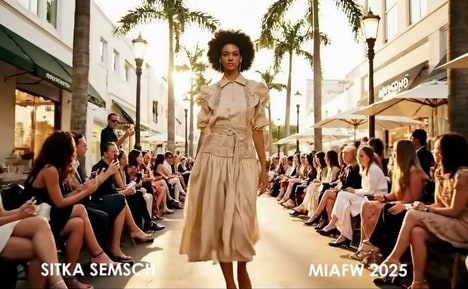
LIM College is presenting its 81st annual student-produced fashion show on April 10 at The Glasshouse in Manhattan. The presentation features seven scenes under the theme Global Fashion Fusion — framed as "a celebration of diverse cultures, fashions, and styles showcasing how global influences shape modern fashion."
LIM College's student-produced fashion show is segmented into divisions, starting with the Ballroom Division and then moving to The Art of Elegance, Apocalyptic Erosion, After the Ashes, and The New Order. The first segment boasts a runway "assembled by LIM student stylists who have been given access to thousands of garments and accessories, all available from brands sold on Amazon.com." New York City-based LIM student designers tackle the Apocalyptic Erosion segment, while After the Ashes and The New Order boasts the work of recent design graduates of ESMOD France.
Image Credit: LIM College
What's Driving This Trend
- Student-produced Runways
- Emergence of end-to-end student-led shows that combine design, curation, and production could reshape credentialing and talent pipelines in fashion.
- Global Fashion Fusion
- Blending multicultural aesthetics across segmented collections signals new product lines that recombine traditional craft techniques with contemporary silhouettes.
- Retail-sourced Styling
- Use of mass-market retail inventories like Amazon as runway material highlights opportunities for on-demand, curated merchandising models tied to experiential showcases.
Who This Affects Most
- Higher Education
- Academic programs integrating live industry-grade productions may create alternative pathways to employment and novel university-industry revenue streams.
- Fashion Retail
- Retailers supplying garments for student stylists point toward immersive commerce experiences where product discovery is driven by live content and event-driven curation.
- Event Production
- Small-scale, theme-driven shows that double as talent incubators suggest a shift toward modular, branded event formats scalable across cities and campuses.