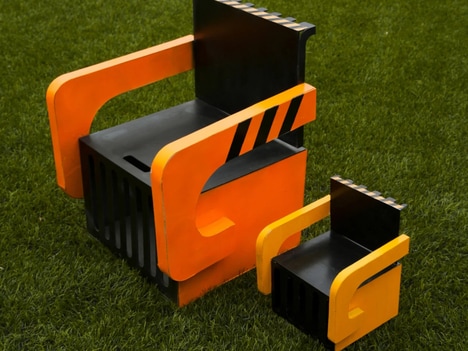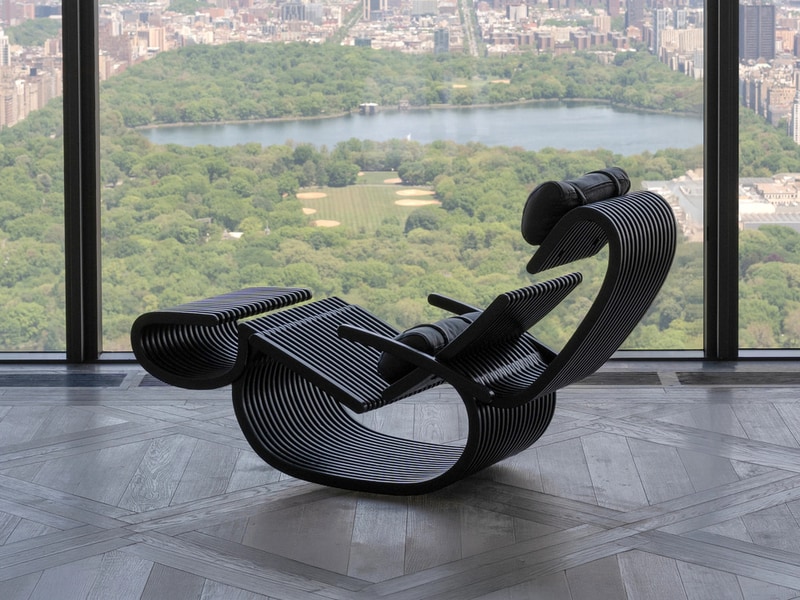
Designer Jonah Rappaport created the Silhouette chair as a convertible seating system that shifts between an armchair, lounge chair, and chaise longue configuration through concealed internal mechanisms. The project combines layered Baltic birch plywood with rotating structural components that reposition the headrest and legrest into load-bearing supports during transformation. Rappaport fabricated the chair over four months at Yale University’s wood and metal workshops before the project received recognition through the A’ Design Award 2025–2026 program.
Silhouette integrates concealed locking components within the base while maintaining a continuous sculptural plywood exterior without exposed hardware or auxiliary framing. The chair includes adjustable armrests, an adjustable backrest, and metal-to-metal moving connections assembled without permanent glued joints. Rappaport laser-cut, hand-routed, sanded, stained, threaded, welded, and finished the wood and metal components individually before assembly. A black stain finish and clear polyurethane coating unify the layered plywood structure.
Image Credit: Jonah Rappaport
Why This Trend Is Growing
- Concealed Mechanical Systems
- Hidden mechanical systems enable products with seamless exteriors that mask complex motion, creating new expectations for invisible functionality in everyday objects.
- Convertible Multi-mode Seating
- Seating that reconfigures between distinct ergonomic modes within a single form factor offers opportunities for compact living and adaptive spatial solutions.
- Precision Wood-and-metal Craftsmanship
- High-precision joinery and metal-to-metal connections within layered timber structures create durable, repairable alternatives to glued or molded mass-produced components.
Industries Being Reshaped
- Contract Furniture Manufacturing
- Public and commercial furnishing suppliers could differentiate offerings by integrating concealed conversion mechanics to meet flexible use and aesthetic demands of shared spaces.
- Hospitality and Contract Interiors
- Hotels and premium lounges stand to benefit from adaptable seating that maintains a sculptural look while serving multiple guest needs in compact footprints.
- Aerospace and Automotive Interiors
- Transportation cabin designers may adopt compact convertible seating mechanisms to optimize passenger comfort and space efficiency without exposed hardware.