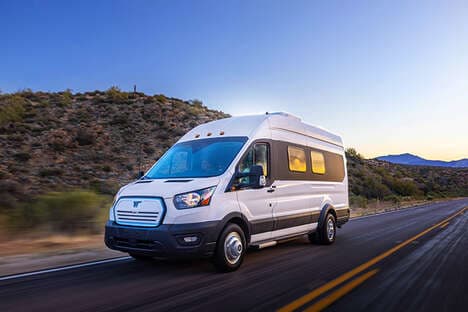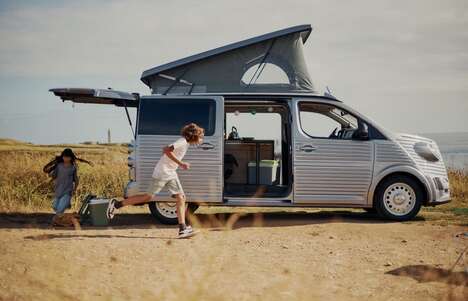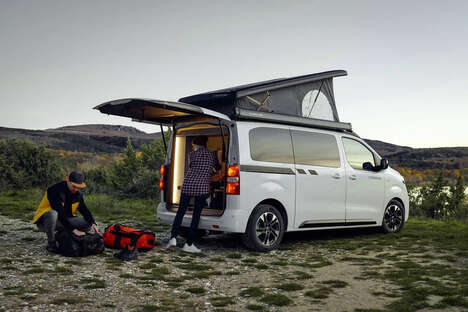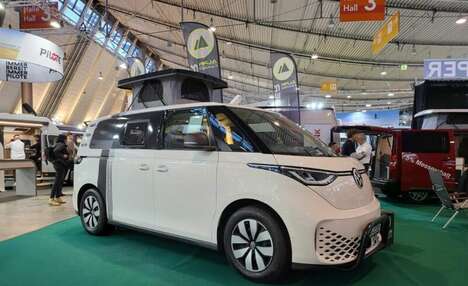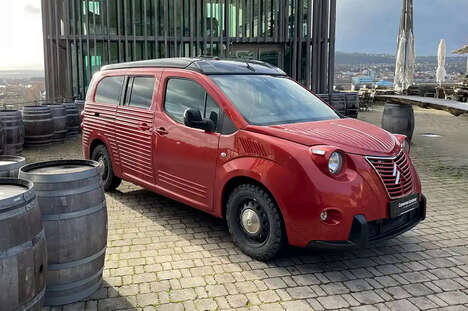
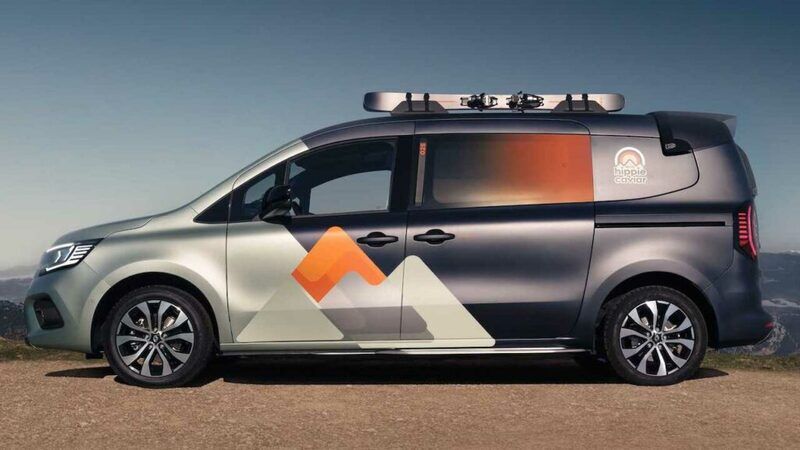
The Renault Hippie Caviar Motel camper van has been shown off by the brand ahead of a formal unveiling at the IAA Transportation in Hanover as an emissions-free solution for camping enthusiasts. The vehicle is built on the Kangoo L2 E-Tech Electric to give it an emissions-free form, and is expected to feature a 120-horsepower electric motor with a 45kWh battery pack. These features combine to deliver 177-miles, but these numbers haven't been officially confirmed by the company.
The Renault Hippie Caviar Motel camper van is expected to be a more pared down version of the brand's previous Hotel camper and will maintain a sleek construction. The vehicle will offer ample space for storing essentials, while the rooftop rack provides a spot for sports gear.
Image Credit: Renault
What's Driving This Trend
- Emissions-free Camping
- The concept of an emissions-free vehicle for camping enthusiasts presents opportunities for developing sustainable outdoor equipment, such as solar-powered tents and portable generators.
- Electrified Camper Van Market
- The Renault Hippie Caviar Motel camper van signifies a growing trend in electrified camper van models and the need for more electric charging infrastructure in remote areas.
- Minimalist Camper Van Design
- The pared-down design of the Renault Hippie Caviar Motel reflects a trend towards more minimalist and modular camper van designs that emphasize flexibility and efficiency.
Who This Affects Most
- Auto Industry
- Automakers and electric vehicle manufacturers can capitalize on the shift towards sustainable travel and camping by developing more emissions-free camper vans and RVs.
- Outdoor Recreation Industry
- The trend towards emissions-free camping presents opportunities for creating more sustainable outdoor equipment, such as solar-powered tents and portable generators.
- Renewable Energy Industry
- The need for more electric charging infrastructure in remote camping areas presents opportunities for renewable energy companies to develop off-grid charging solutions using solar and wind power.