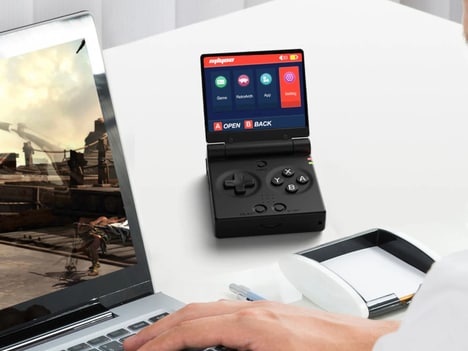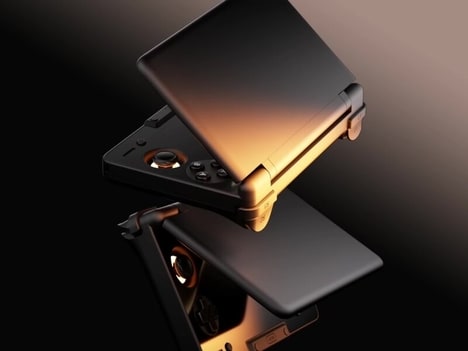
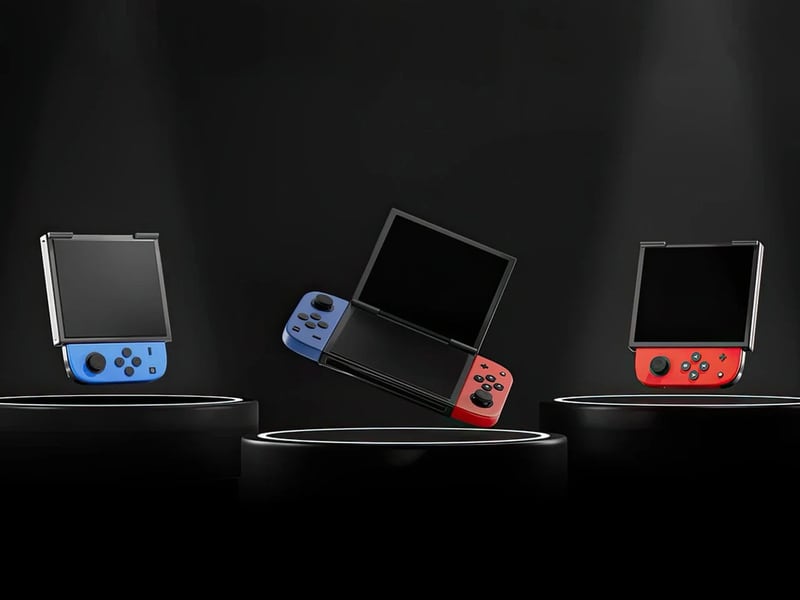
Designer Juan Manuel Guerrero visualized a Nintendo dual-screen folding for the Switch concept that reimagined the hybrid console as a clamshell device, featuring a central hinge and Joy-Con controllers mounted on each half. The renders presented a closed, pocketable profile and an open layout that echoed the DS family’s two-screen play while using modern, larger displays.
The concept emphasized spatial game design rather than announcing engineering details; Guerrero’s images leaned on product-photography lighting and accurate proportions to suggest how past DS mechanics could map onto contemporary foldable displays. The piece compared the idea to current commercial foldables, noting industry advances in hinge durability and large interior panels.
For players and designers, the concept matters because it spotlights a resurrected gameplay vocabulary—separate screens for map, inventory, or touch input—that modern foldable tech could support. It reframes handheld evolution as a design choice, not just a specs race, and signals opportunities for software to exploit dual displays again.
Image Credit: Yanko Design
Key Themes Behind This Trend
- Foldable Dual-screen Revival
- A return to dual-screen foldables creates scope for hardware designs that integrate separate persistent displays for complementary content, reshaping device form factors away from single-panel interactions.
- Spatial Game Design Resurgence
- Design paradigms that place maps, inventories, and touch inputs on dedicated screens open possibilities for games that distribute core mechanics across physical display zones.
- Portable Clamshell Reimagining
- Recasting handhelds as pocketable clamshells with mounted controls presents room for rethinking ergonomics and interface continuity between closed and open states.
Where This Applies
- Console Gaming
- Modern consoles could be disrupted by titles and peripherals optimized for dual-display interactions that emphasize simultaneous, distinct gameplay surfaces.
- Consumer Electronics
- The folding-display supply chain and hinge-engineering sectors face opportunities from demand for durable large-panel clamshells combining tactile controls and segmented screens.
- Game Software Development
- Toolkits and engines tailored for multi-screen state management and UI placement are positioned to alter how studios architect game interfaces and player flow.