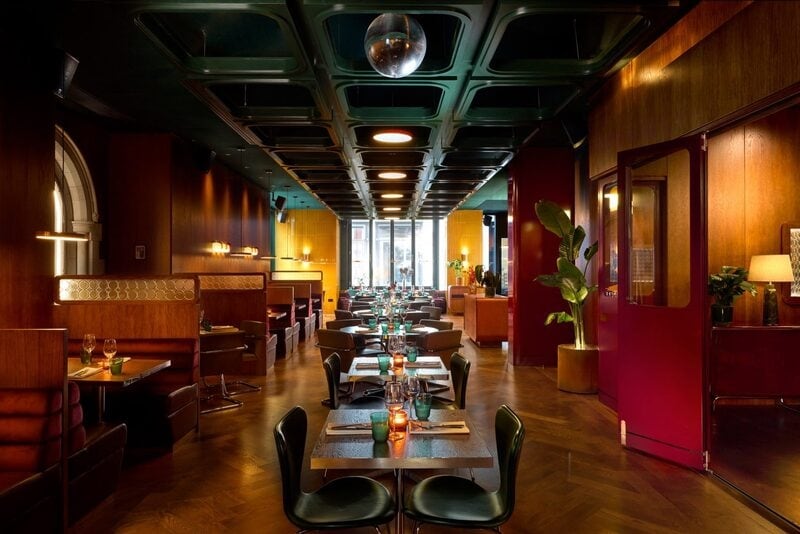
The Motorino restaurant occupies a former chapel in Fitzrovia, London, and adapts the historic structure into a contemporary dining environment. The design retains the building’s original volume, pitched roof, and structural shell while introducing a series of freestanding insertions that define dining, bar, and service zones. These new elements are constructed primarily from timber, creating a deliberate contrast with the chapel’s exposed masonry and plaster surfaces. Circulation is organized to move guests gradually from the entrance toward the central dining area.
Interior elements such as custom seating and joinery are positioned to respond to the chapel’s proportions and architectural rhythm. Lighting is used to emphasize the relationship between old and new materials while drawing attention to vaulted ceilings and existing structural details. The project balances preservation with intervention, maintaining the chapel’s spatial character while accommodating restaurant functions.
Image Credit: Mark Scott
Why This Trend Is Growing
- Heritage-conscious Design
- Blending contemporary elements with historical structures allows for the creation of unique spaces that respect and enhance their architectural heritage.
- Multifunctional Spatial Zones
- Designing interior spaces with freestanding elements opens up opportunities for flexible and adaptive use within existing structures.
- Material Contrast Highlighting
- Using contrasting materials like timber against historic masonry creates a visual dialogue between tradition and modernity.
Industries Being Reshaped
- Hospitality Design
- The integration of adaptive design in dining spaces showcases a shift towards innovative hospitality environments that respect historical contexts.
- Architectural Preservation
- The trend of revitalizing historic buildings demonstrates potential for industries focused on merging preservation with modern functionality.
- Interior Lighting Solutions
- Lighting design that highlights architectural details and material contrasts evolves as a crucial component in redefining space perception in adaptive reuse projects.