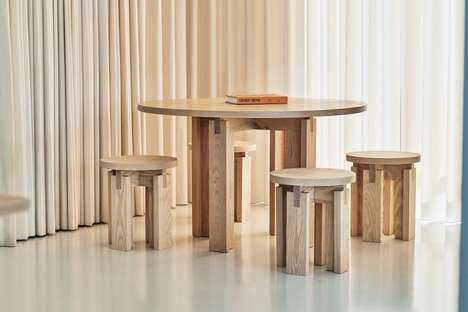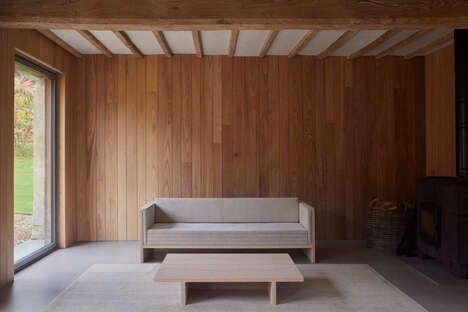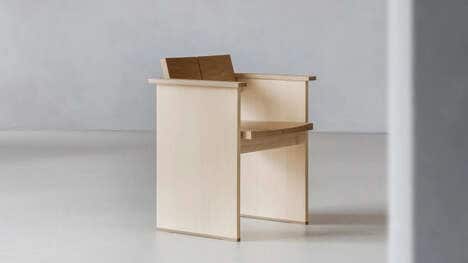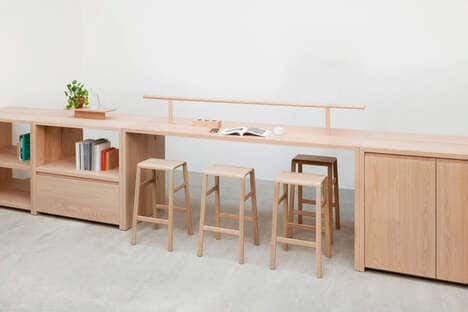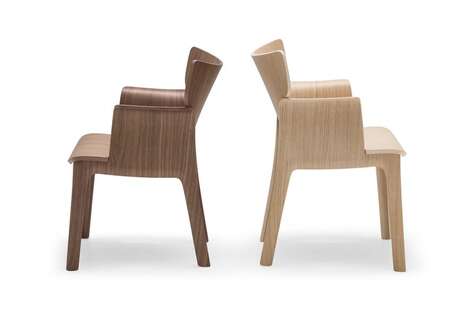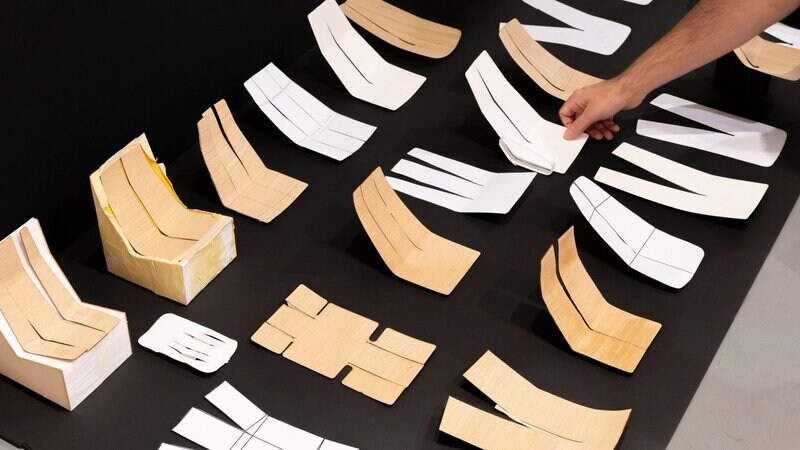
The new Foster + Partners Join collection with Isokon launched at the London Design Festival, introducing a series of furniture pieces crafted from plywood. The range includes a lounge chair, footstool, and tables whose forms emerge through iterative prototyping. Each piece in the collection shows plywood used in unconventional ways, bent, layered, and jointed, to explore both strength and elegance.
Finishes mix plywood’s natural grain with subtle veneer accents to highlight texture and craftsmanship. Joints are concealed yet engineered to support comfort and durability. The collection balances minimalism with warmth, avoiding excess decoration while embracing the material’s honesty. By collaborating in this way, Foster + Partners and Isokon shift plywood from purely utilitarian toward expressive furniture design, suggesting new possibilities for material innovation in modern interiors.
Image Credit: Foster + Partners, Aaron Hargreaves
Key Themes Behind This Trend
- Innovative Plywood Applications
- Exploring unconventional uses of plywood redefines its application in furniture design, showcasing the material's potential beyond traditional, utilitarian purposes.
- Minimalist Aesthetic with Material Warmth
- Emphasizing a balance of minimalism and texture invites opportunities for creating elegant yet inviting modern interiors.
- Iterative Prototyping in Furniture Design
- Employing iterative prototyping in design processes fosters advancements in creativity and functionality, offering novel ways to integrate form and function.
Where This Applies
- Sustainable Furniture Manufacturing
- Leveraging materials like plywood in innovative ways aligns with eco-conscious practices and meets rising consumer demand for sustainable home furnishings.
- Interior Design and Home Decor
- Enhancements in furniture material uses and aesthetics have the potential to redefine modern living spaces, blending artistry with functionality.
- Prototyping and Design Technology
- Adopting advanced prototyping techniques in furniture design opens the door for rapid iteration and experimentation, leading to breakthrough product innovations.