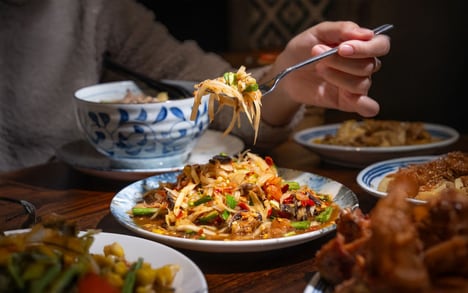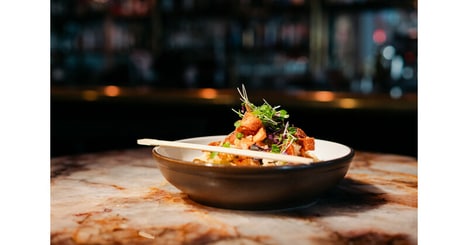

Jintana Thai Farmhouse incorporates Jaew style sauces into specific dishes, with Nam Jim Jaew referenced through preparations that use its characteristic roasted chili, fish sauce, and tamarind profile. The menu includes the Yum Rib Eye Steak Jaew Makham, a dish that applies a tamarind based Jaew sauce to grilled beef. This preparation reflects the same structural elements found in Nam Jim Jaew, including a balance of heat, acidity, and savory depth. The dish description indicates that the sauce is not an optional accompaniment but an integral component of the plate.
Other menu items at the restaurant follow a similar pattern of integrating Jaew style sauces into grilled or seared proteins. These applications align with established Thai culinary practice, where Jaew sauces are paired with meats that benefit from contrasting acidity and roasted chili notes. The presence of these preparations demonstrates that Jintana Thai Farmhouse incorporates Jaew based sauces in a targeted manner, using them to support the flavor structure of specific dishes rather than as a general condiment across the menu.
Image Credit: Jintana Thai Farmhouse
What's Driving This Trend
- Sauce-integrated Proteins
- Menus that fuse region-specific sauces directly into grilled and seared proteins create opportunities for signature dishes where the condiment is an essential component of the protein’s flavor profile.
- Regional Flavor Amplification
- A renewed focus on distinctive regional sauces like Nam Jim Jaew signals potential for elevated authenticity-driven offerings that highlight unique spice, acid, and umami balances.
- Purposeful Condiment Placement
- The practice of pairing sauces selectively with particular cuts and cooking methods reveals potential for curated flavor-pairing systems that optimize taste contrast and texture.
Who This Affects Most
- Restaurant Concepts
- Specialty eateries built around integrated sauce-protein pairings suggest a chance for branded dining formats that differentiate through proprietary sauce recipes and plating logic.
- Food Manufacturing
- Manufacturers of shelf-stable or chef-ready sauces could capitalize on demand for regionally authentic formulations tailored to specific proteins and cooking techniques.
- Culinary Education and Tech
- Platforms teaching applied pairing science and recipe standardization indicate potential for tools that codify sauce-to-protein matches for chefs and foodservice operators.