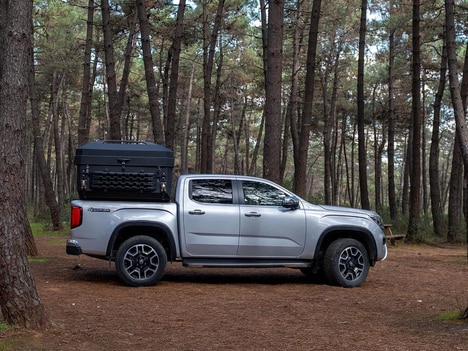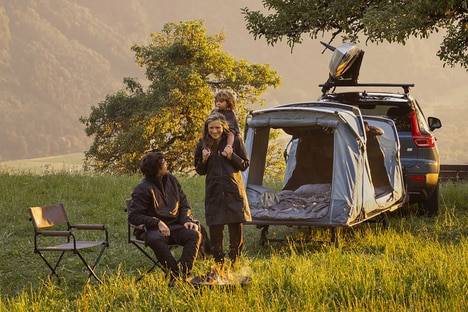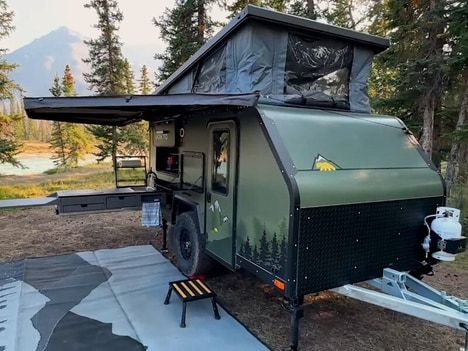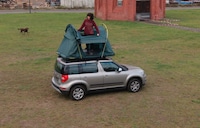

The Inspired Overland Trailpeak rooftop tent has been created by the California-based brand as a slim, lightweight camping solution that will immediately transform the capabilities of off-grid campers alike.
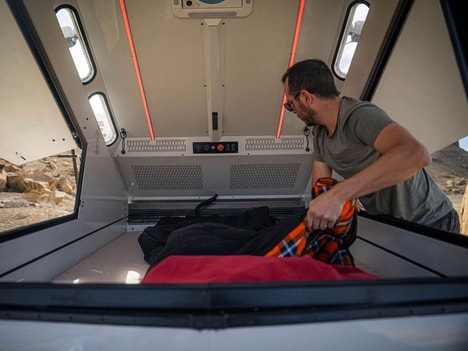
The unit weighs in at 84-pounds and features a side-folding design that will open like a book to reveal a sizable interior space perfect for individuals or couples. The strut-assisted roof panel offers just shy of four-feet of headroom across the entire unit to maximize consistency without creating an unusable space.
The Inspired Overland Trailpeak rooftop tent comes with a 1.5-inch foam mattress with an anti-condensation mat to prioritize comfort when sleeping. The unit is rounded out with a telescopic ladder and walls made out of 2000D Oxford fabric for a waterproof build.
Image Credit: Inspired Overland
What's Driving This Trend
- Lightweight Modular Camping Systems
- A shift toward sub-100-pound rooftop units suggests new opportunities for integrated, modular camping platforms that minimize vehicle payload while expanding accessory ecosystems.
- Space-efficient Foldable Designs
- Slim, book-style opening mechanisms highlight potential for compact envelope structures that maximize interior volume without increasing exterior bulk.
- Comfort-focused Minimalist Sleep Solutions
- Inclusion of thin high-performance mattresses and anti-condensation layers points to novel materials and constructions that balance comfort with extreme weight and thickness constraints.
Who This Affects Most
- Automotive Overlanding Accessories
- Rooftop tents that add minimal weight create room for lightweight mounting systems and low-impact installation methods tailored to a broader range of vehicles.
- Outdoor Textile Manufacturing
- Demand for waterproof, durable yet lightweight fabrics like 2000D Oxford opens avenues for advanced composite textiles that improve weather resistance while reducing mass.
- Recreational Vehicle Design
- The trend toward compact, high-volume rooftop shelters indicates possibilities for RV and vehicle roof architecture that integrates sleeping systems without compromising aerodynamics.