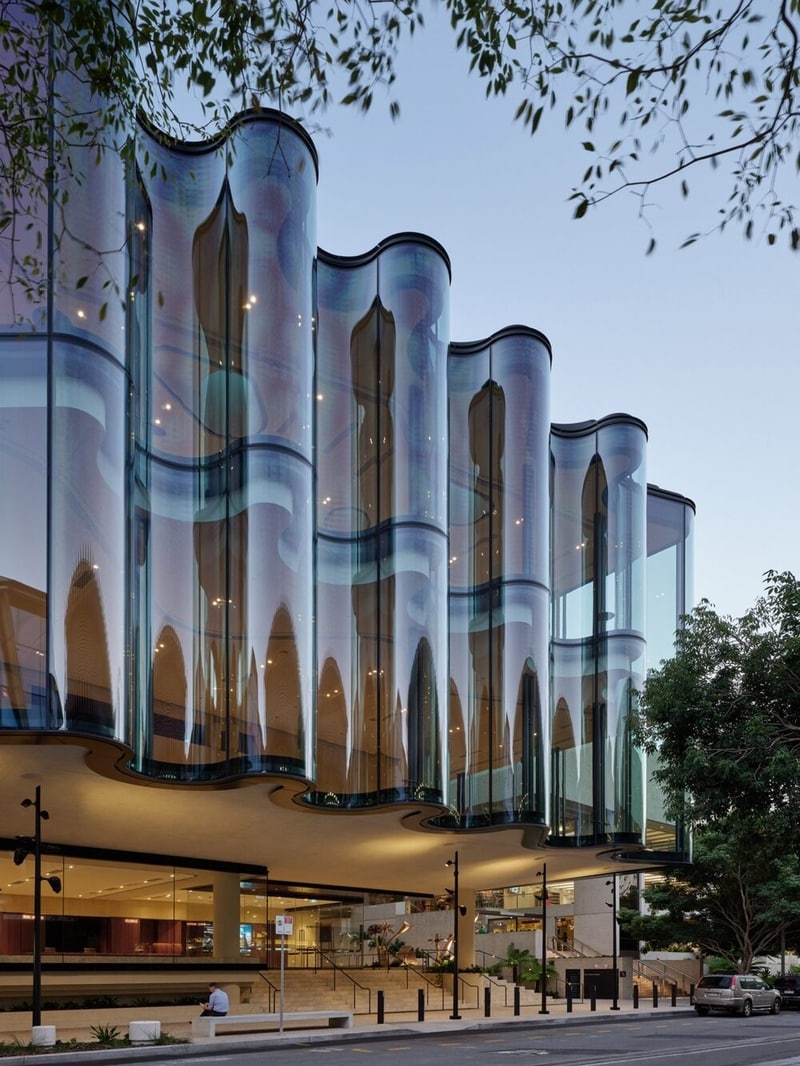
The Glasshouse Theatre is a new 1,500-seat performing arts venue designed by Snøhetta with Australian practice Blight Rayner for the Queensland Performing Arts Centre in Brisbane. The Glasshouse Theatre forms the fifth theatre within the QPAC complex and was developed to accommodate large productions including ballet, opera, musicals, and drama. At its core sits a concrete auditorium connected to the existing 1980s complex, while a rippled glass façade wraps around the building to create transparent foyers and public circulation spaces.
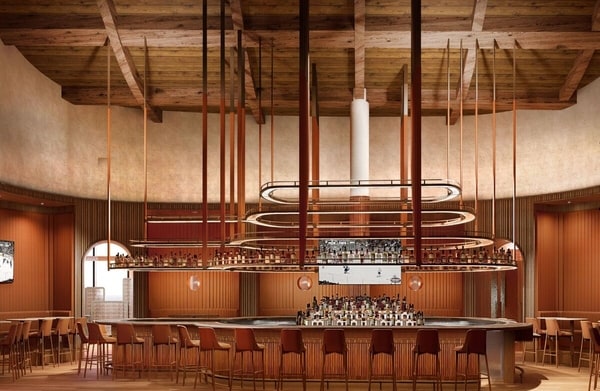
The curved glass envelope references the movement of the nearby Brisbane River and gives the building a fluid, reflective exterior. Inside, the auditorium is defined by curved timber ribbons that wrap the seating bowl and help manage acoustics while concealing technical equipment. A flexible orchestra pit with multiple lift systems allows different stage configurations, including a thrust stage for varied performance formats.
Image Credit: Christopher Frederick Jones.
What's Driving This Trend
- Rippled Glass Façades
- A fluid, sculpted glass envelope that blends transparency and reflection creates scope for novel engineered glazing systems and curved-panel fabrication methods.
- Adaptive Acoustic Interiors
- Curved timber ribbons and concealed technical volumes point to integrated acoustic materials and morphing interior surfaces that tailor soundscapes for multiple performance types.
- Flexible Stage Infrastructure
- Multi-lift orchestra pits and reconfigurable stage formats suggest emergent modular stage platforms and automated rigging solutions for rapid scene changes.
Who This Affects Most
- Performing Arts Venues
- Large-capacity cultural centers with interconnected foyers are positioned to adopt hybrid programming models and spatial technologies that redefine audience flow and experience.
- Architectural Glass Manufacturing
- Producers of specialty glazing can explore advanced cold-bending, laminated composites, and integrated shading or smart-glass functions for complex curved façades.
- Theatre Technology and Rigging
- Providers of stage mechanics and control systems face opportunities in automated lift architectures, sensor-driven safety systems, and interoperable production software.