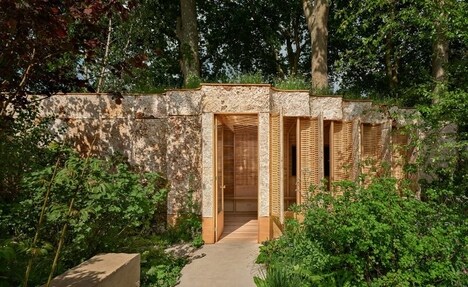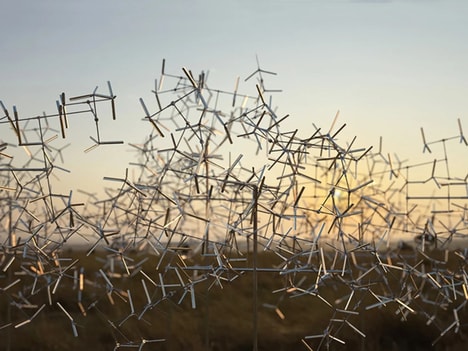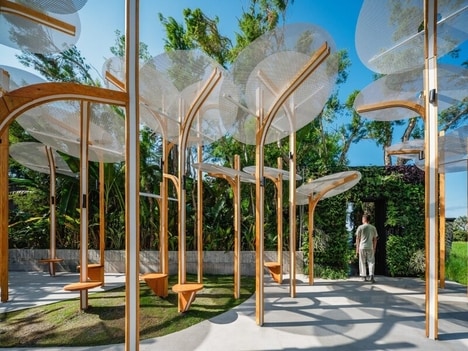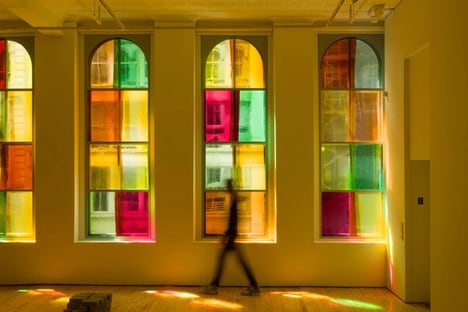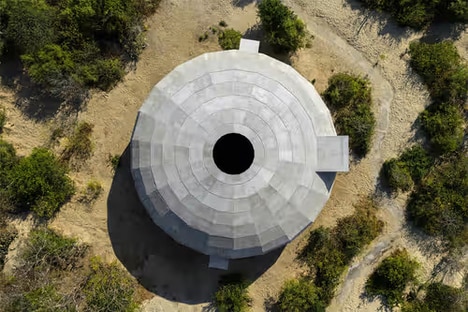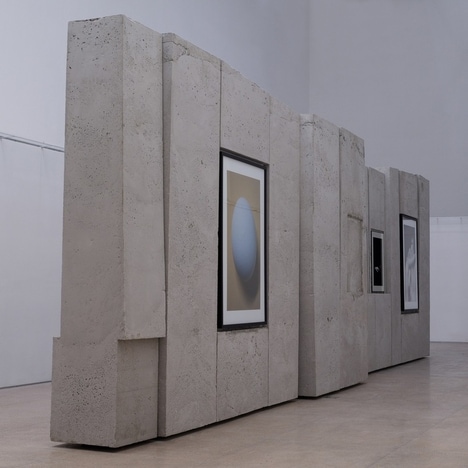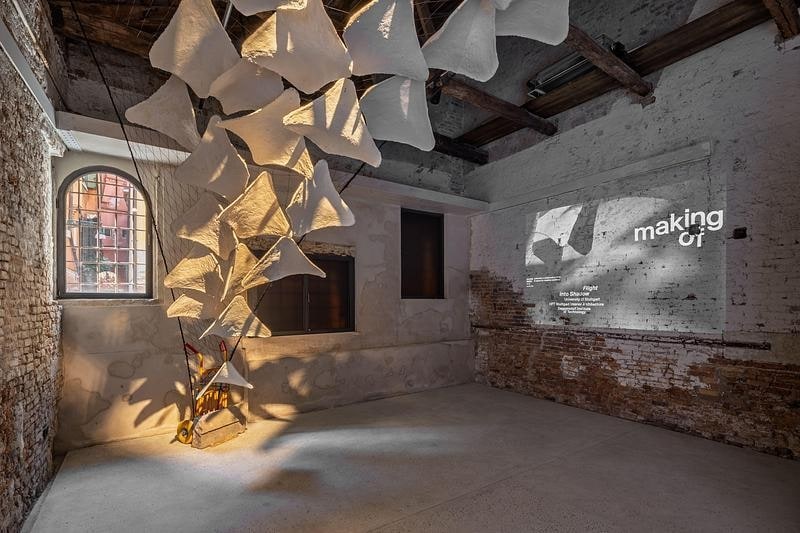
The Deggendorf Institute of Technology, in collaboration with HFT Stuttgart and the University of Stuttgart, created an installation called Flight into Shadow. Presented at the Venice Architecture Biennale 2025, this project used living mycelium structures as organic filters to soften and scatter light from an artificial sun composed of individually controlled luminaires. The dynamic creates constantly shifting atmospheres that range from intense brightness to gentle refuge.
The Flight into Shadow installation drew inspiration from the Komorebi effect, which refers to the fleeting play of sunlight filtering through tree leaves. The designers translated this natural phenomenon into an architectural experience where shadow becomes an active, spatial element. Visitors were invited to move through spaces where light and shadow dynamically change over time, allowing them to experience how exposure, protection, and perception interact in heat-stressed urban environments.
Image Credit: Jacopo La Forgia
Key Themes Behind This Trend
- Living-mycelium Architecture
- Incorporation of living fungal networks as structural and environmental filters suggests materials that self-regenerate and modulate indoor microclimates.
- Dynamic Light-filtering Surfaces
- Programmable organic membranes that scatter and diffuse illumination imply novel interfaces between lighting control and breathable building envelopes.
- Biophilic Shadow Design
- Designs that treat shadow as an active spatial element point to new experiential metrics for comfort and occupant wellbeing in dense cities.
Where This Applies
- Heat-resilient Urban Infrastructure
- Using mycelium-based shading and cooling elements could redefine passive temperature management in heat-stressed public spaces.
- Adaptive Lighting Systems
- Networks of individually controlled luminaires paired with responsive biomaterials indicate lighting ecosystems that tune visual environments to human and climatic conditions.
- Sustainable Materials Manufacturing
- Scalable cultivation of mycelium components presents potential for low-carbon, biodegradable alternatives to conventional architectural cladding and insulation.