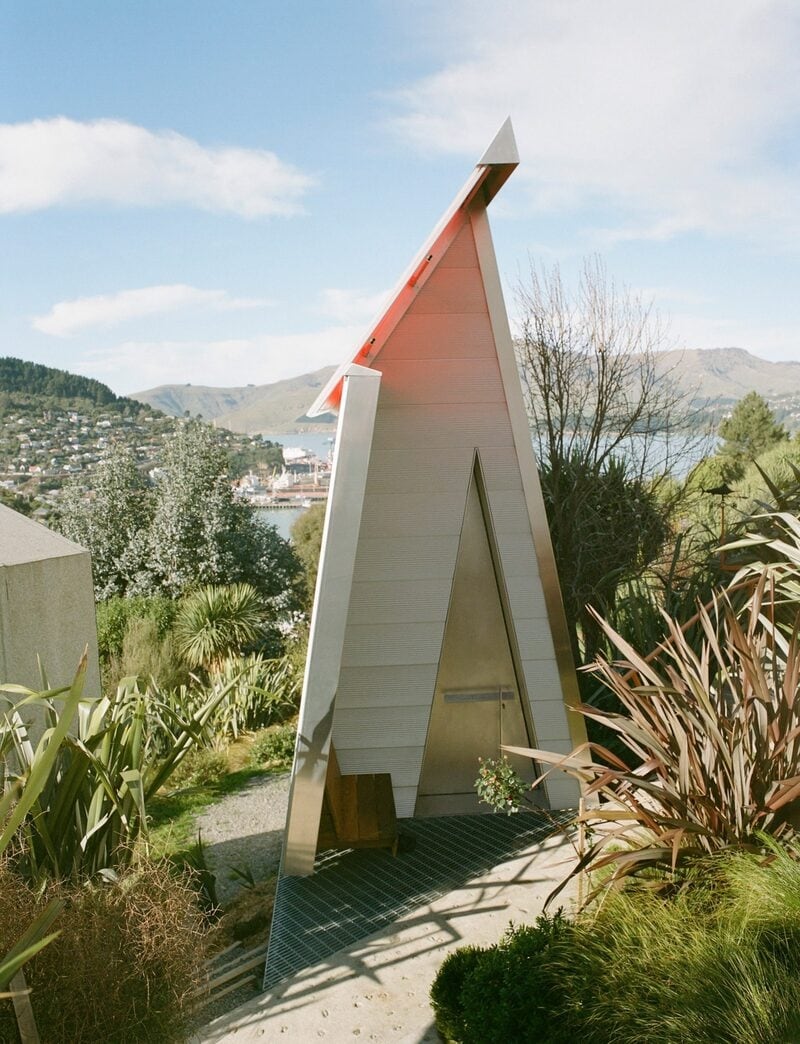
The Chapel of St Thérèse of Lisieux by Bull O’Sullivan Architecture sits on a sloping site above Lyttelton Harbour in New Zealand, designed as a 17-square-metre space for prayer and contemplation. The building’s compact scale reflects its spiritual intent, emphasizing intimacy and humility over grandeur. A sharply angled roofline and triangular doorway frame views of the surrounding landscape, drawing light inward and marking a slow transition from exterior openness to interior stillness.
The native rimu timber wraps the walls and ceiling, creating warmth and texture against the aluminum-clad exterior. The restrained palette allows material honesty to define atmosphere, while careful craftsmanship anchors the chapel in local tradition. The Chapel of St Thérèse of Lisieux stands as both a place of solace and a gesture of community, demonstrating how architecture can distill spirituality into form and light.
Image Credit: Mary Gaudin
What Makes This Trend Stand Out
- Timber-based Worship Spaces
- Architecturally innovative chapels are incorporating native timber to create harmonious sanctuaries that blend seamlessly with their natural surroundings.
- Compact Spiritual Architecture
- Designers are focusing on small-scale spiritual buildings that foster intimacy and personal reflection, prioritizing thoughtful spaces over large complexes.
- Material Honesty in Design
- A trend towards the use of authentic materials is redefining aesthetic value, highlighting craftsmanship and local tradition in modern architectural projects.
Sectors Adopting This
- Sustainable Architecture
- The use of native timber and minimalist design in projects like The Chapel of St Thérèse of Lisieux reveals growing opportunities for sustainability-focused architectural practices.
- Religious and Spiritual Spaces
- Innovative design approaches in intimate chapels are creating new possibilities within the religious sector for personalized and community-centered worship environments.
- Craftsmanship and Design
- The emphasis on local timber and detailed craftsmanship in modern architectural projects underscores a burgeoning industry focusing on artisanal building techniques.