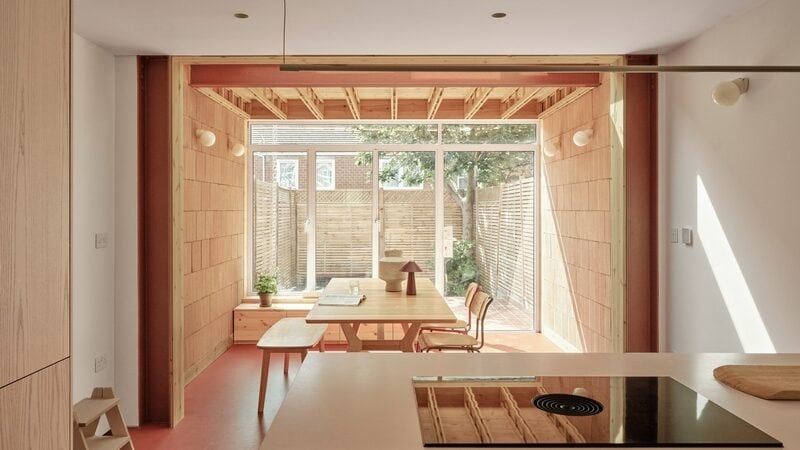
The Butterfield House Extension uses exposed Porotherm for a compact upgrade by replacing the rear of a London terrace with a structurally efficient clay-block volume designed by THISS Studio. The single material serves as structure, insulation, and interior finish, creating walls that remain visible rather than being covered with plasterboard. The blocks align with the tone of the original brickwork while providing improved thermal performance and reducing construction layers. Large sliding glass doors open the ground floor to the garden, allowing natural light to counter the visual weight of the clay surfaces and brighten the deeper parts of the plan.
The extension sits on a screw pile foundation with a raised slab that minimises excavation and protects the site’s existing ground conditions. The layout adds a larger kitchen and dining area with a clear distinction between new and old construction. Joinery and flooring are kept minimal to highlight the blockwork, and the compact footprint is organised to improve circulation through the home
Image Credit: Henry Woide
What Makes This Trend Stand Out
- Exposed Clay-block Architecture
- The use of exposed clay-block materials in home extensions represents a shift towards minimalistic designs that merge structural efficiency with aesthetic appeal.
- Integrated Building Materials
- Single-material solutions that provide structure, insulation, and finish are streamlining construction processes and reducing the need for multi-layer building techniques.
- Sustainable Foundations
- Screw pile foundations minimize excavation and environmental disturbance, promoting sustainable development practices for home construction projects.
Sectors Adopting This
- Residential Construction
- The residential construction industry can explore innovative ways to incorporate integrated materials and sustainable foundations for efficient home expansions.
- Green Building Materials
- Clay blocks serving multiple purposes within construction projects mark a significant advancement in eco-friendly building materials that enhance energy efficiency.
- Architecture and Design
- Architectural design firms are gaining new ground by experimenting with exposed materials that highlight raw textures, establishing a trend towards natural aesthetics.