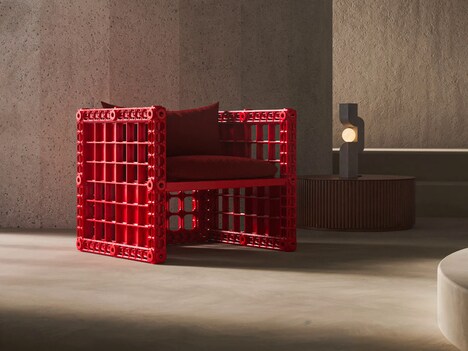
The Bultan chair by Paris-based design studio Maximum creatively transforms discarded steel crowd-control barriers into sturdy, sculptural seating. The repurposed metal forms the frame, complemented by cushions made from foam and rubber offcuts sourced locally—materials that would otherwise be waste. Upholstery uses excess automotive-grade fabric with industrial qualities such as abrasion resistance, fire safety, and stain-proof performance.
Maximum commits to pollution cleanup through design: aside from screws, every component originates from reclaimed materials. Production is entirely local in France, reinforcing circular design principles and minimizing the carbon footprint. The chair comes with a ten-year guarantee, underlining its durability and commitment to longevity. With a bold yet functional aesthetic, the Bultan chair demonstrates how everyday detritus can be elevated into elegant, eco-conscious design.
Image Credit: Maximum
Why This Trend Is Growing
- Circular Furniture Economy
- The integration of waste materials into stylish and functional furniture exemplifies a shift towards a circular economy in the furniture industry.
- Sustainable Design Practices
- Design studios are increasingly prioritizing sustainability by repurposing industrial waste into innovative consumer products.
- Local Production Movement
- Manufacturing locally to minimize environmental impact and support circular economy ties into the growing trend of localized and sustainable production methods.
Industries Being Reshaped
- Eco-friendly Furniture
- The eco-friendly furniture industry is leveraging sustainable materials to create modern, environmentally conscious designs that attract eco-aware consumers.
- Waste Management and Recycling
- Enhanced recycling and innovative waste management solutions are being crucially applied to transform discarded materials into valuable assets across various sectors.
- Automotive Supply Chains
- Repurposing excess automotive-grade textiles for upholstery highlights a new direction in utilizing surplus industrial materials in consumer goods.