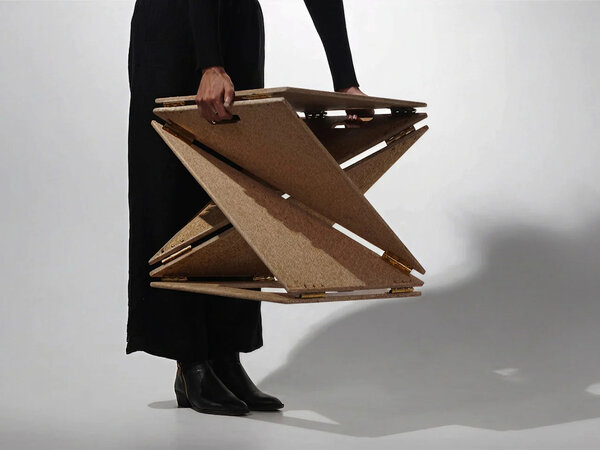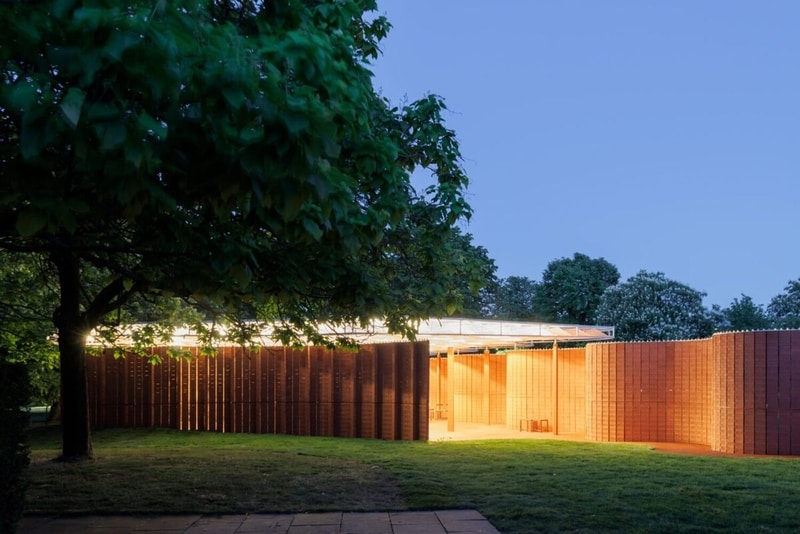
The 2026 Serpentine Pavilion designed by Lanza Atelier for the annual architecture commission in London. Created by the Mexico City-based studio, the structure is the first Serpentine Pavilion to be constructed from brick and draws inspiration from traditional English crinkle-crankle walls.
The design features a sinuous red-brick form that defines a covered gathering space and an adjoining outdoor area framed by a winding brick bench. Built without mortar to allow future disassembly, the pavilion uses steel plates and reinforced brick columns to provide structural support while maintaining the appearance of a lightweight masonry enclosure.
The pavilion is organized around an open and flexible events space enclosed by curving walls and sheltered by a transparent roof supported by a white steel framework. Brick paving extends throughout the interior, where a stepped seating area is integrated into the rear wall and can also function as a stage. Lanza Atelier additionally designed movable wooden chairs and stools that allow visitors to reconfigure the space as needed.
Image Credit: Iwan Baan
Why This Trend Is Growing
- Disassemblable Masonry Construction
- The use of mortar-free brick assemblies and steel plates signals a shift toward buildings designed for full future deconstruction and material reuse.
- Sinuous Heritage-inspired Forms
- Reinterpreting traditional crinkle-crankle walls into flowing pavilion geometry highlights renewed interest in biomorphic and locally rooted masonry aesthetics.
- Configurable Public Interiors
- Integrated stepped seating, movable furniture, and adaptable covered/uncovered zones point to a demand for multi-functional civic spaces that can morph by use and event.
Industries Being Reshaped
- Construction Materials
- The reliance on reinforced, reusable brick systems and concealed steel connectors suggests opportunities for manufacturers to supply standardized recyclable masonry components.
- Cultural Institutions
- Museums and public commissions exhibiting flexible, narrative-driven architecture may benefit from commissioning structures that combine performance staging with exhibition space.
- Prefabricated Architecture
- Manufacturers of modular building systems can explore combining traditional materials with prefabricated structural plates to deliver site‑assembled yet reversible installations.