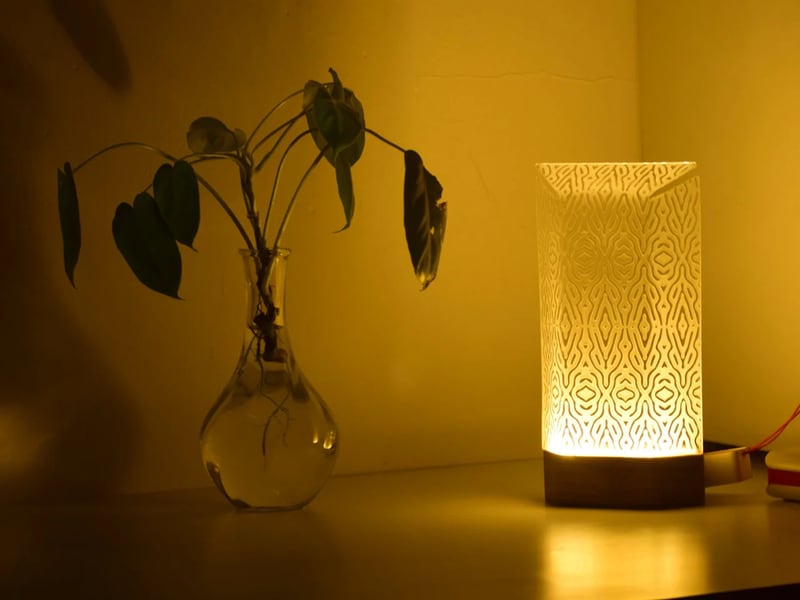
The Aurelia table luminaire by Nizamuddin N.S is a sculptural table lamp inspired by the movement and structure of jellyfish. The design references the slow motion of jellyfish tentacles through layered surface detailing across the lamp’s translucent shade. The object functions as an ambient lighting piece intended for bedside tables, desks, and living areas rather than task lighting. The lamp remains visually restrained when unlit, presenting a tall vertical form with a textured surface pattern.
The lamp consists of a slim translucent shade mounted on a dark rectangular base that resembles wood. A dense etched lattice pattern covers the shade surface and becomes visible when light passes through it. When switched on, warm amber illumination spreads across the patterned surface, emphasizing the layered texture of the material. The contrast between the dark base and the illuminated shade defines the lamp’s visual structure.
Image Credit: Nizamuddin N.S
Key Themes Behind This Trend
- Biomimetic Lighting Design
- Designs that mimic organic movement and morphology create lighting pieces that evoke natural rhythms and emotional responses in interior environments.
- Textured Translucent Surfaces
- Layered etching and patterned translucency produce complex light diffusion effects that transform ambient glow into tactile visual landscapes.
- Ambient Mood-focused Fixtures
- A shift away from task-oriented luminaires toward sculptural, warm-amber sources prioritizes atmosphere and psychological comfort in personal spaces.
Where This Applies
- Home Furnishings
- High-end residential décor can be redefined by sculptural lamps that serve as both functional light sources and statement art objects.
- Hospitality and Boutique Hotels
- Guestroom and lobby environments stand to be differentiated through ambient, nature-inspired luminaires that contribute to brand storytelling and guest experience.
- Advanced Materials and Manufacturing
- Innovations in translucent polymers and surface-etching techniques enable scalable production of intricately patterned shades that alter light behavior and aesthetic appeal.