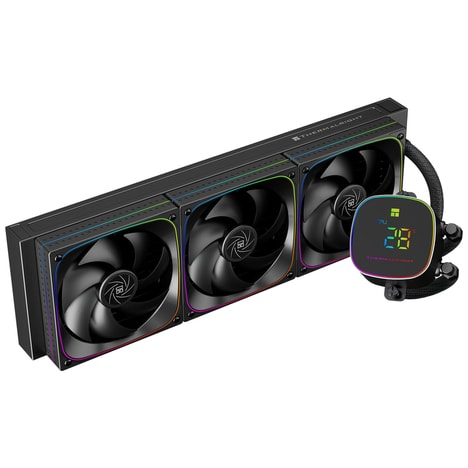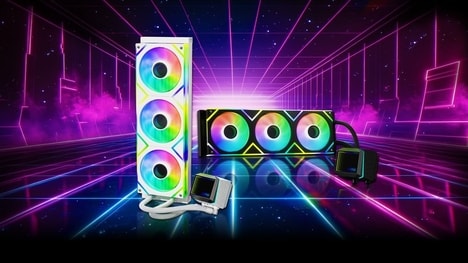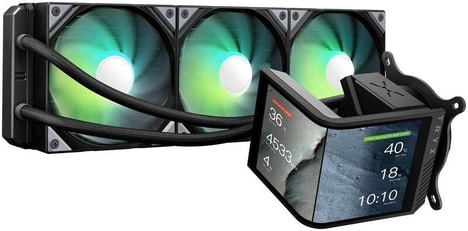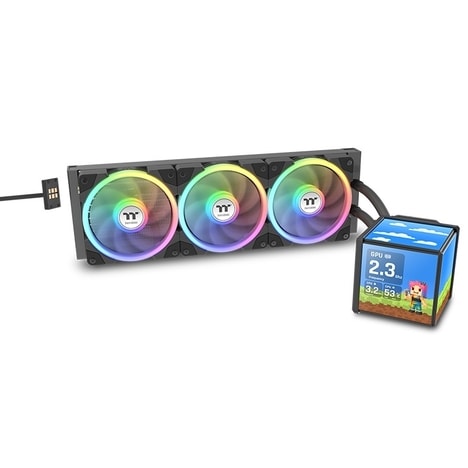
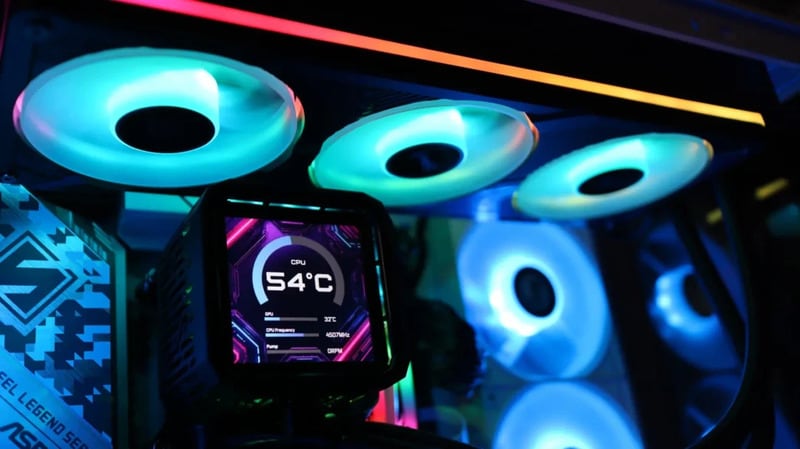
ASRock introduced the Phantom Gaming 360 LCD, a 360mm all-in-one (AIO) liquid cooler aimed at PC builders seeking performance and visual flair. The unit shipped with a radiator and triple-fan array, featuring a 3.4-inch LCD integrated into the pump head that displays graphics or system telemetry.
The cooler paired the large 360mm radiator with high-static-pressure fans and a pump designed for sustained CPU heat removal, and it included customization options for the LCD content. Fit and finish matched ASRock’s Phantom Gaming aesthetic, with braided tubing and RGB-capable accents to coordinate with gaming rigs.
For consumers, the Phantom Gaming 360 LCD combined thermal capacity typical of 360mm AIOs with on-pump readouts, letting builders monitor temps or show visuals without extra software windows. This blend of thermal headroom and in-chassis information display reflects a trend toward merging utility with built-in customization in gaming PC components.
Image Credit: ASRock
Key Themes Behind This Trend
- Integrated Display Cooling
- On-pump LCDs and in-line readouts create opportunities for cooling solutions that double as informative visual surfaces without increasing case clutter.
- Modular Aesthetic Components
- Customizable RGB and interchangeable faceplates signal demand for component ecosystems where visual coherence and upgradeability become product differentiators.
- Telemetry Driven Hardware
- Built-in telemetry displays shift system monitoring from software overlays to embedded hardware, enabling more immediate and persistent status awareness.
Where This Applies
- PC Gaming Peripherals
- High-end gaming rigs stand to be redefined by peripherals that integrate cooling, display, and lighting into cohesive, brand-aligned modules.
- Data Center Thermal Management
- Large-format cooling designs with advanced monitoring could inspire denser, rack-level solutions that combine thermal capacity with localized status indicators.
- Consumer Electronics Design
- The blending of functional hardware and customizable surfaces opens avenues for home electronics to provide contextual information through embedded displays.