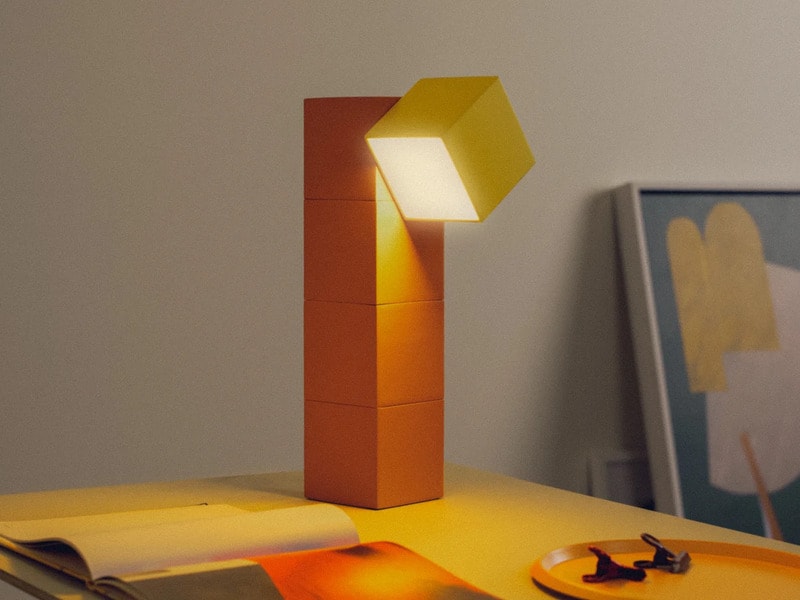
Analog Lamps by Chris Granneberg are lighting products that merge LEGO-style modular bricks with functional lamp hardware. The lamps use a base module housing electrical components and integrated light sources, while the upper body is constructed from interlocking brick elements that users can customise with LEGO or compatible bricks. The design permits personal reconfiguration of shape, height and shade orientation by rearranging brick sections around the central lighting module.
The series includes table and floor lamp versions with concealed wiring and power systems integrated into the base. Each lamp’s brick body supports standard light diffusers and sockets, allowing the modular form to remain stable while carrying the electrical load. Analog Lamps are sold through the Museum of Modern Art (MoMA) design store, positioning them alongside collectible design objects. The project combines familiar play-based construction components with conventional lighting functions to create a utilitarian object with customizable form.
Image Credit: Chris Granneberg
Why This Trend Is Growing
- Modular Design
- The integration of LEGO-style modularity in lighting fixtures offers a versatile approach to home decor, enabling users to customize and reconfigure products based on personal aesthetic and functional needs.
- Playable Decor
- Blending playful elements with household objects fosters an interactive consumer experience, transforming traditional decor into functional yet engaging designs.
- Customizable Home Solutions
- Lighting solutions that permit personal reconfiguration promote a shift away from static designs, emphasizing adaptability to individual styles and space requirements.
Industries Being Reshaped
- Home Decor
- The fusion of playful, modular elements with functional design revolutionizes the traditional lighting sector, catering to growing consumer demand for personalized home environments.
- Toys and Play-based Products
- Hybrid products incorporating toy-like features redefine conventional toy industry boundaries, appealing to both adult and child consumers seeking creative expression.
- Art and Design Retail
- Selling functional art pieces alongside collectible design objects at venues like MoMa signals a trend towards expanding product categories in high-end retail environments.