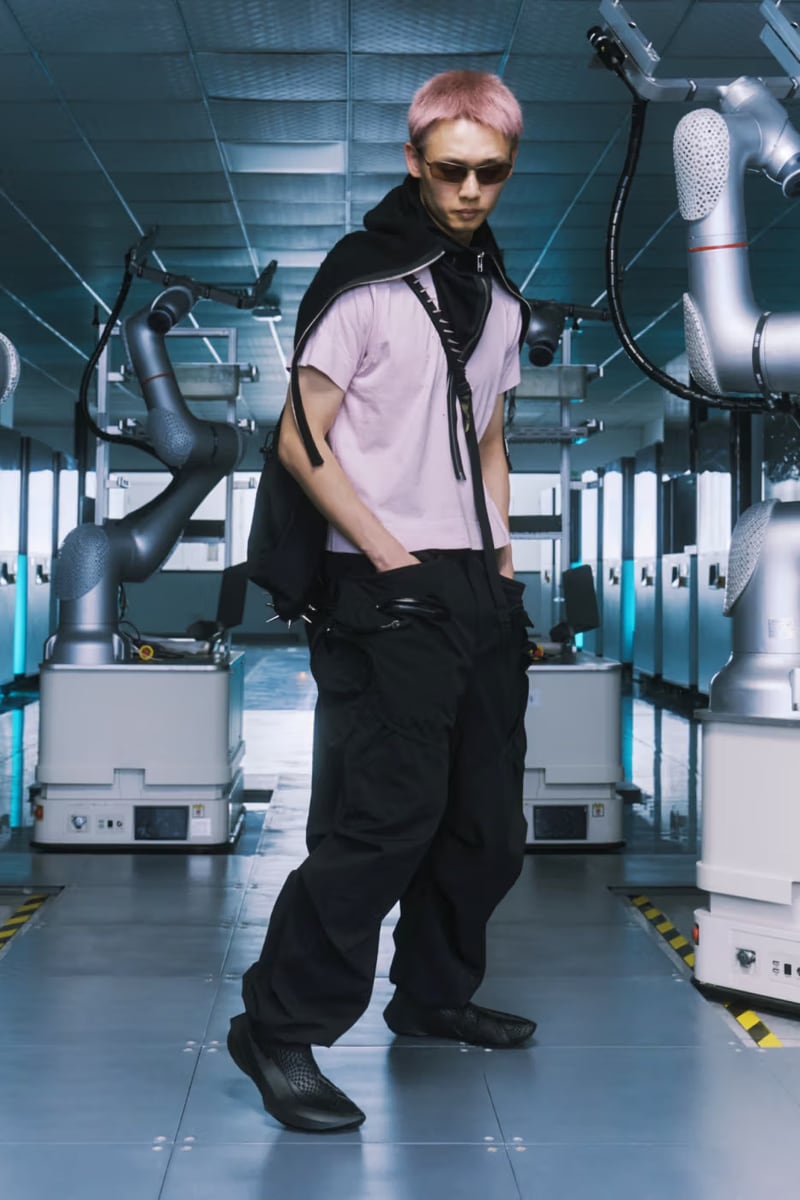
ACRONYM and ALIVEFORM released THE BLADE as a fully 3D-printed shoe constructed around an exposed lattice framework and elongated blade-like silhouette. The design references Tsui Hark’s 1995 wuxia film The Blade while using a porous open structure intended to circulate air across the foot during wear. ALIVEFORM manufactures each pair through a single-pass 3D printing process that eliminates stitching, gluing, and conventional molding techniques, allowing the shoe to maintain a continuous geometric shell across the upper and sole.
The shoe launches in four colorways including Charcoal, Ghost Glass, Nickel, and fluorescent green Wasp Tech. Pricing ranges from ¥44,000 JPY to ¥52,800 JPY depending on the finish and material treatment. The lattice geometry integrates cushioning and flexibility directly into the printed structure while maintaining a barefoot-style fit and exaggerated aerodynamic profile.
Image Credit: ALIVEFORM, hypebeast
Key Themes Behind This Trend
- 3d-printed Continuous Lattice Footwear
- A seamless single-pass 3D printing method that removes stitching and gluing creates potential for radically simplified production lines and bespoke fit at scale.
- Integrated Lattice Cushioning
- Porous geometric structures that combine cushioning, flexibility, and ventilation into one printed element open avenues for multifunctional component consolidation and weight reduction.
- Aerodynamic Blade-shaped Silhouettes
- Elongated, sculptural profiles that emphasize airflow and a barefoot fit suggest new stylistic categories that blend performance engineering with high-fashion design.
Where This Applies
- Footwear Manufacturing
- Production paradigms that shift from sewing and molding to single-pass additive processes could upend supply chains and lower barrier to customized, on-demand runs.
- Additive Manufacturing Materials
- Demand for durable, flexible, and breathable printable polymers and composite treatments is likely to accelerate innovation in material formulations and post-processing techniques.
- Athletic Performance Gear
- Equipment that integrates structural, cushioning, and ventilation properties directly into one printed component points to new product classes that prioritize integrated biomechanical performance.