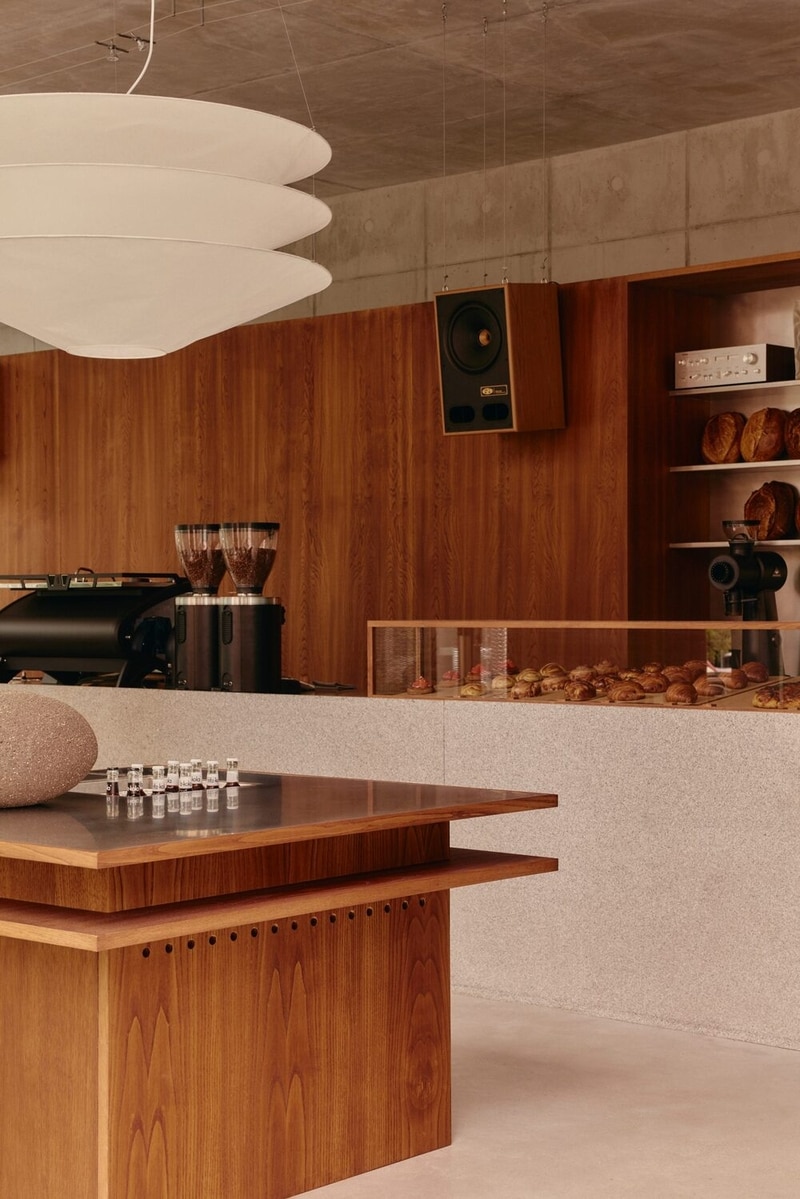
The Acid Cafe Berlin by Plantea Estudio is a specialty coffee shop interior located in Berlin’s Prenzlauer Berg district overlooking Teutoburger Platz. The Acid Cafe Berlin by Plantea Estudio occupies the ground floor of a corner building and retains the existing raw concrete structure as the foundation of the interior design. Within this shell, the studio introduced materials including granite, stainless steel, and chestnut wood to create a warmer environment around the coffee service area.
A large chestnut-wood structure forms the centerpiece of the cafe and wraps around the staircase leading to the basement level. This sculptural element also functions as shelving and a base for the sound system while visually organizing the room. Opposite the structure, a monolithic counter made from stainless steel and granite contains the coffee bar. Seating includes chestnut stools, steel tables, and benches placed near the windows facing the square outside.
Image Credit: Daniel Faro?
What's Driving This Trend
- Material Contrast Interiors
- Blending raw concrete with warm woods and refined stone creates a new aesthetic language that enables hybrid surface systems and material-packaged retrofit solutions.
- Sculptural Furnishings as Functional Elements
- Large carved wood structures that combine shelving, circulation, and tech mounting point to multiuse furniture that redefines space planning and component integration.
- Warm Minimalism in Industrial Shells
- Introducing selective warm materials into austere structural shells reveals opportunities for modular interior kits that transform atmospheres without altering building fabric.
Who This Affects Most
- Hospitality and Cafe Design
- Reimagined counters and integrated seating concepts suggest service-zone products that consolidate barista workflow, customer interaction, and display into single prefabricated units.
- Furniture Manufacturing
- Demand for sculptural, multifunctional pieces indicates potential for CNC-produced, customizable wood modules that serve storage, acoustics, and circulation roles.
- Acoustic and Audio Integration
- Embedding sound systems into wooden architectural elements highlights opportunities for aestheticized acoustic products that merge speaker technology with joinery and shelving.