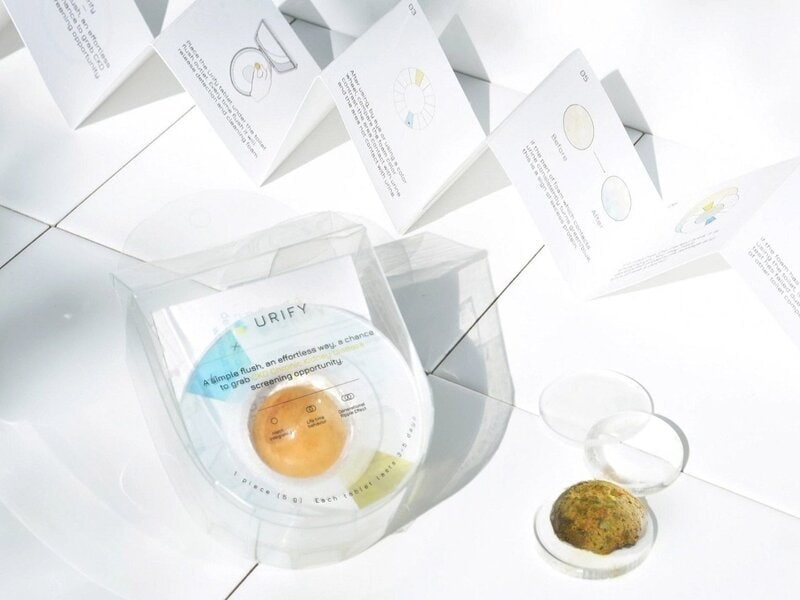
The 'Urify' toilet tablet has been developed by student designer Yidan Xu as a dual-purpose product for households to incorporate into their regular health routines. The tablet works by being positioned onto the bowl in a toilet where it will last for between three and five days, and will dispense cleaning solution to keep the fixture fresh. The tablet will automatically change the color of the water if it detects kidney damage in the person's urine to alert them that they should see a doctor.
The 'Urify' toilet tablet could be used one to two-times per year to keep up with regular testing and could help to offer support for the estimated 800-million people around the world who experience kidney damage.
What's Driving This Trend
- At-home Health Monitoring Devices
- The development of products like 'Urify' reflects a growing trend towards self-administered health diagnostics, which are revolutionizing how individuals manage their health at home.
- Discreet Health Testing Solutions
- Discreet health monitoring products, such as toilet-based test tablets, are emerging as a novel approach to integrating regular health checks into everyday routines without disrupting privacy.
- Color-changing Diagnostic Technologies
- The use of color-changing indicators in products like health testing tablets introduces a visually intuitive method of health monitoring, enhancing user engagement and understanding.
Who This Affects Most
- Healthcare Consumer Products
- With innovations like 'Urify,' the healthcare consumer products industry is expanding to include more accessible health monitoring solutions that blend seamlessly into daily life.
- Smart Sanitation Devices
- The introduction of health-testing capabilities into sanitation products represents a new direction for the smart sanitation device industry, aiming to support health and hygiene simultaneously.
- Home Diagnostics
- The home diagnostics industry is witnessing a shift as multifunctional diagnostic tools like toilet tablets become increasingly viable, offering consumers new ways to engage with their health data.