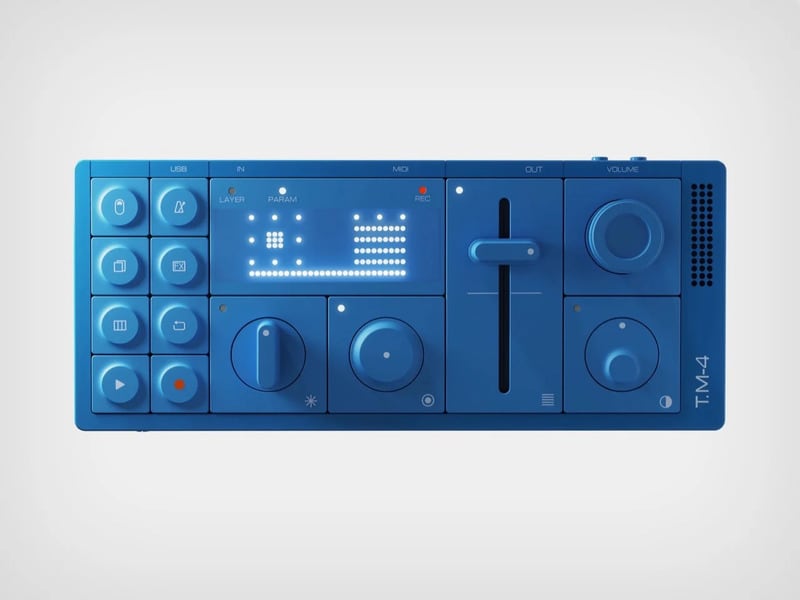
The T.M-4 sampler uses AI to simplify layered composition and sound separation in a music device concept that reimagines tactile hardware for users without deep technical experience. Designed by Junho Park, the T.M-4 draws visual and interface cues from Teenage Engineering’s recognisable sampler aesthetic, pairing modular controls, knobs and buttons with an AI-driven engine that automatically breaks incoming audio into discrete layers, such as drums, bass, melody and effects for further manipulation.
Rather than relying on just complex software workflows, the T.M-4 lets users feed audio through USB-C, mic, AUX or MIDI inputs and then adjust parameters like texture, energy, complexity and brightness through physical controls, making real-time changes to the sound’s character. An on-device grid display and joystick assist navigation through samples and layers without requiring a dense on-screen timeline.
Image Credit: Junho Park
What Makes This Trend Stand Out
- AI-powered Audio Decomposition
- Utilizing AI to break down audio into distinct layers like drums and melody allows for new levels of creative manipulation in music production.
- Tactile Interface Innovation
- Reintroducing tactile interaction with AI-driven devices bridges the gap between hardware enthusiasts and digital audio workstations.
- Modular Control Systems
- The integration of scalable hardware controls with intelligent software offers users a customizable and intuitive audio editing experience.
Sectors Adopting This
- Music Technology
- Incorporating AI technology into music devices is transforming the way music is composed and produced, making it accessible to non-experts.
- Audio Engineering
- AI-driven solutions for sound separation and manipulation are reshaping traditional approaches to audio design and sound engineering.
- Consumer Electronics
- Innovations in AI-assisted hardware design are setting new standards for user-friendly electronic devices in the consumer market.