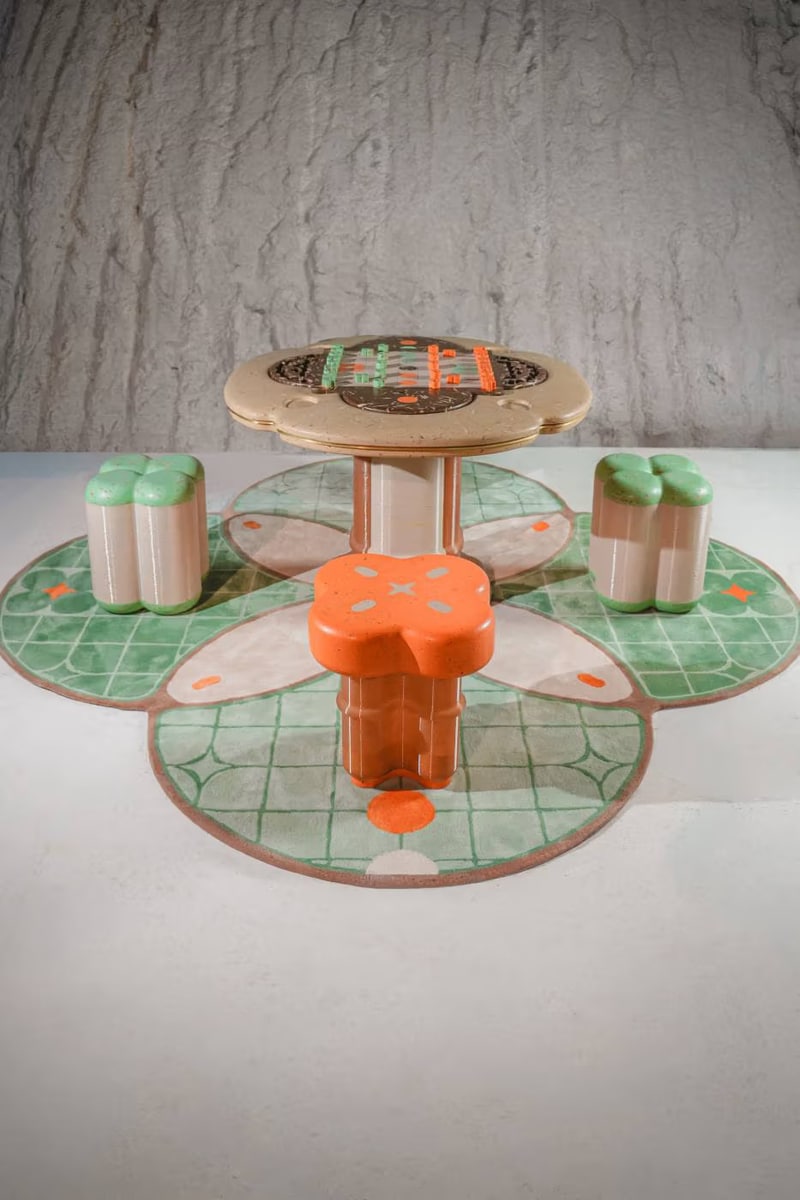
The Upcycled Gambit by reEDIT, a project by EDITECTURE, debuted at Milan Design Week 2026 as a chess table set built from upcycled materials including bamboo scaffolding, tea waste, and recycled plastic. The design draws from Hong Kong street culture, referencing informal chess games and milk tea rituals, translating these elements into a functional table with integrated board and seating. The structure uses modular components that can be assembled and disassembled, allowing the set to adapt across different environments.
The table combines a central playing surface with attachable elements that extend its use beyond a standard chess set. Material choices reflect reuse and circular design, with visible textures from reclaimed bamboo and composite surfaces formed from tea residue. The system is designed for repeat assembly and transport, using a construction method that prioritizes flexibility.
Image Credit: Editecture
What's Driving This Trend
- Modular Upcycled Furniture
- Products composed of detachable, reusable modules that adapt to different spatial contexts and extend product lifecycles through easy assembly and transport.
- Food-waste Composite Materials
- Composite surfaces incorporating tea residue and other food waste that offer unique textures and circular-material narratives with lower embodied carbon than conventional plastics.
- Street-culture Inspired Design
- Design language and functional cues drawn from informal urban rituals, such as public chess and milk-tea gatherings, that translate cultural authenticity into mainstream consumer goods.
Who This Affects Most
- Furniture and Interior Design
- Mass-market and boutique furniture lines leveraging upcycled components and modularity to introduce value through sustainability storytelling and adaptable form factors.
- Sustainable Materials Manufacturing
- Manufacturers developing processing methods for plant-fiber scaffolds and food-waste composites that shift supply chains away from virgin plastics toward circular feedstocks.
- Urban Public Space Development
- Placemaking projects and public-furniture programs that integrate culturally resonant, transportable pieces to activate neighborhoods while emphasizing reuse and community rituals.